


Revit Drafting Services in Sydney: What Architecture Firms Should Expect in 2026

Is your architecture firm turning down projects because you don't have enough Revit capacity?
The Sydney architectural market in 2026 is more competitive than ever. Client expectations are higher, project timelines are tighter, and finding qualified Revit talent is increasingly difficult. The average time to hire a mid-level Revit technician in Sydney now exceeds 14 weeks, with starting salaries ranging from $75,000 to$95,000 plus superannuation.
This is why more Sydney architecture firms are turning to professional Revit drafting services,not as a cost-cutting measure, but as a strategic capability extension that delivers quality documentation without the overhead and delays of traditional hiring.
This guide explains what Sydney architecture firms should expect from Revit drafting services in 2026, how to evaluate providers, and what separates excellent service from mediocre outsourcing.
The Sydney Market Reality: Why Revit BIM Services Make Sense in 2026
The Staffing Challenge
Sydney's architectural talent shortage isn't improving. The combination of major infrastructure projects, residential development demand, and limited Revit-skilled graduates creates intense competition for qualified staff.
Current market conditions:
- 14-week average time-to-hire for Revit technicians
- $75,000-$95,000 starting salaries for mid-level drafters
- 35% turnover in architectural documentation roles
- 6-8 weeks' typical notice period when staff resign
The real cost of hiring:
- Salary + super: $82,000-$104,000 annually
- Recruitment fees: $15,000-$20,000
- Training and onboarding: 4-6 weeks of reduced productivity
- Software licenses: $3,500-$4,500 per seat annually
- Office space and equipment: $8,000-$12,000 annually
Total first-year cost per drafter: $120,000-$155,000
The Workload Reality
Architecture firms face unpredictable workload cycles:
- Peak periods: DA submissions, CC documentation, tender packages,all happening simultaneously
- Quiet periods: Post-submission lulls where full-time staff sit underutilized
- Sudden opportunities: New client projects requiring immediate resourcing
- Staff leave: Annual leave, sick leave, parental leave, creating gaps
Traditional staffing models struggle with this variability. You're either overstaffed during quiet periods or overwhelmed during peaks.
Revit drafting services provide flexibility to scale capacity up and down without the fixed costs of permanent staff.
What Quality Revit Drafting Services Deliver
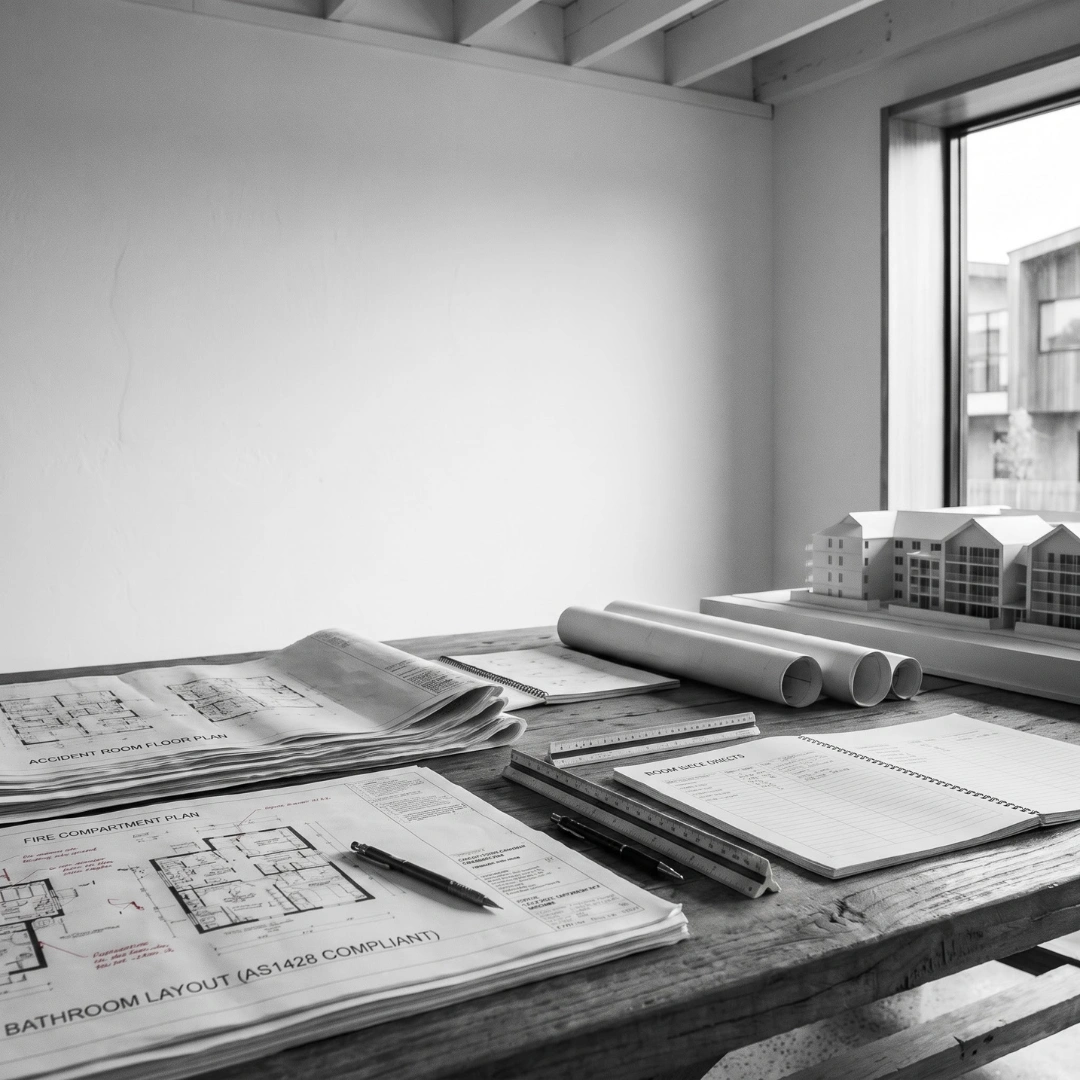
1. Australian Standards Compliance
Not all Revit services understand Australian building requirements. Quality providers deliver documentation that complies with:
Essential Australian Standards:
- NCC 2022 (Volume One & Two)
- AS 1428 (Accessible design)
- AS 1100.101 (Drawing standards)
- AS/NZS ISO 19650 (Information management)
State-Specific Requirements:
- NSW: BASIX compliance, planning portal submission formats
- VIC: Planning scheme overlays, development contribution plans
- QLD: Bushfire attack level (BAL) compliance in prone areas
Your Revit service should understand these requirements intuitively, not require constant education.
2. Consistent LOD Standards
Level of Development (LOD) consistency matters for coordination and downstream use.
LOD 200 (Schematic Design):
- Approximate geometry and dimensions
- Generic components and assemblies
- Suitable for early coordination and costing
LOD 300 (Design Development):
- Precise geometry and dimensions
- Specific components with accurate sizing
- Sufficient for coordination and builder pricing
LOD 350 (Construction Documentation):
- Detailed geometry with interfaces
- Specific manufacturers and models
- Ready for construction and fabrication
LOD 400 (Fabrication):
- Complete fabrication details
- Shop drawing ready information
- Typically, only required for prefabricated elements
What to expect: Your Revit service should deliver consistent LOD appropriate to the project stage without requiring detailed instructions each time.
3. Documentation Quality Standards
Professional Revit services maintain documentation standards across:
Drawing Presentation:
- Consistent line weights and patterns
- Clear annotation and dimensioning
- Logical sheet organization and numbering
- Professional title blocks and legends
Model Quality:
- Clean, organized model structure
- Appropriate family usage (not "drafting over model" shortcuts)
- Proper workset organization for collaboration
- Optimized file size and performance
Coordination:
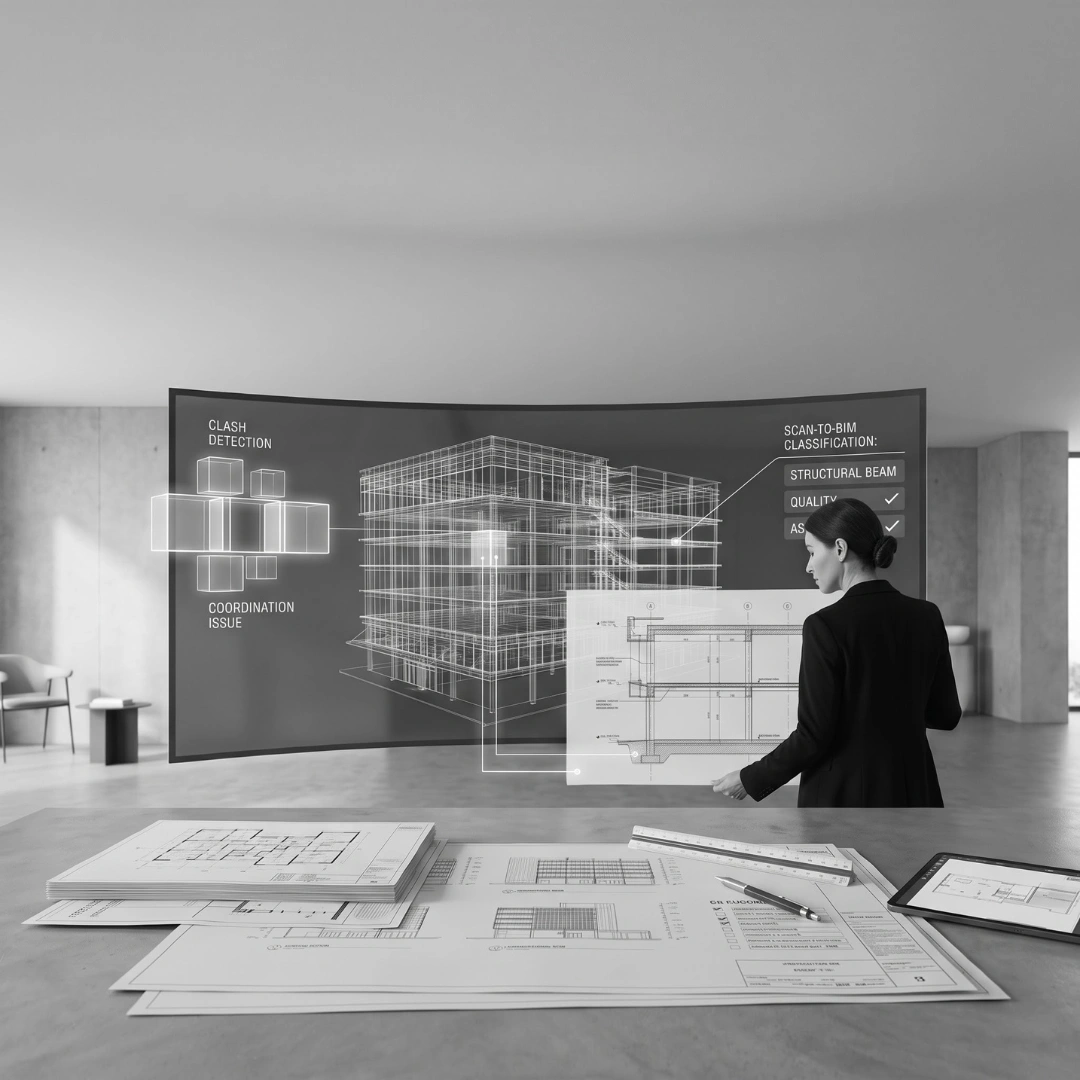
- Internal clash detection before delivery
- Cross-discipline coordination
- Comprehensive drawing sets with all referenced details
- Complete schedules (doors, windows, finishes, rooms)
Engagement Models: How Revit BIM Services Work in 2026
Project-Based Engagement
Best for: Defined scope projects (DA, CC, Tender, As-Built documentation)
How it works:
- You provide design intent, sketches, or schematic models
- Service provider develops documentation to the specified stage
- Fixed timeline and deliverables agreed upfront
- Revisions included (typically 2-3 rounds)
Typical timeline:
- DA documentation: 2-4 weeks
- CC documentation: 4-8 weeks
- Construction documentation: 6-12 weeks
Pricing: Fixed price per project or per drawing sheet, typically $800-$1,800 per sheet, depending on complexity.
Dedicated Resource Model
Best for: Ongoing workload, multiple concurrent projects, long-term capacity needs
How it works:
- Dedicated Revit technician(s) assigned to your firm
- Works exclusively on your projects during contracted hours
- Integrated into your workflow and quality processes
- Scalable (part-time to multiple full-time resources)
Typical commitment:
- Minimum: 20 hours per week (half-time)
- Standard: 40 hours per week (full-time equivalent)
- Team: Multiple resources for larger firms
Pricing: Hourly or monthly retainer, typically $45-$75 per hour depending on skill level and commitment length.
Hybrid Model
Best for: Firms with fluctuating capacity needs
How it works:
- Base retainer for guaranteed monthly capacity
- Additional project-based work as needed
- Priority scheduling for retainer clients
- Flexible scaling during peak periods
Benefits: Predictable baseline capacity with flexibility for overflow.
Quality Indicators: How to Evaluate Revit Service Providers
1. Portfolio and Experience
Request examples of completed documentation similar to your project types:
Red flags:
- Generic portfolio with no Australian projects
- Only renders and visuals, no actual construction documentation
- Can't provide references from Sydney/Australian firms
- Portfolio shows only simple residential, but you do commercial/mixed-use
- Are they using freelancers/contract staff?
Green flags:
- Specific sector experience (multi-res, commercial, education, healthcare)
- Demonstrable understanding of Australian standards
- References from firms similar in size and practice type to yours
- Case examples showing problem-solving and coordination
- Well-defined project delivery process and structure
- Well-established in-house team of professionals
2. Communication and Process
Quality Revit services have clear, professional workflows:
Questions to ask:
- What's your typical response time for questions? (Target: same business day)
- How do you handle urgent changes or tight deadlines?
- What collaboration tools do you use? (BIM 360, ACC, Revit Cloud, etc.)
- How do you ensure consistency across multiple projects?
- What's your quality control process before delivery?
Warning signs:
- Vague answers about process and timeline
- Poor communication during the initial inquiry
- Reluctance to discuss quality control procedures
- No clear project management or single point of contact
3. Technical Capability
Assess technical depth through specific questions:
Technical questions to ask:
- What Revit version(s) do you work in?
- How do you handle coordination with consultants (structural, MEP)?
- What's your approach to model organization and worksets?
- Do you perform clash detection? What software?
- How do you handle Revit family creation or customization?
Expected answers:
- Current Revit version + backward compatibility (2024, 2025, 2026)
- Experience with BIM 360/ACC for federated coordination
- Clear workset methodology (architecture, furniture, site, links, etc.)
- Navisworks or similar for clash detection
- Custom family creation capability with proper parametric controls
4. Understanding of Sydney/NSW Requirements
Test local knowledge with specific questions:
- How do you handle BASIX compliance documentation?
- What format do you use for NSW planning portal submissions?
- How do you approach stormwater and OSD requirements?
- What's your understanding of complying vs. performance solutions under NCC?
Red flag: If they're unfamiliar with these Sydney-specific requirements, expect significant education overhead.
Pricing Transparency: What You Should Pay in 2026
Market Rates (Sydney)
Dedicated Resource:
- Junior drafter (1-3 years): $40-$55/hour
- Mid-level drafter (3-6 years): $55-$70/hour
- Senior drafter/coordinator (6+ years): $70-$85/hour
- Monthly retainer (full-time equivalent): $7,000-$12,000/month
Value calculation:
- Compare to full-time staff: $120,000-$155,000 first-year cost
- Outsourced equivalent: $80,000-$140,000 annually (40hrs/week × $40-$70/hour × 50 weeks)
- Savings: No recruitment, no super, no leave cover, no office overhead, flexible scaling
What Affects Pricing
Higher cost factors:
- Complex building types (hospitals, laboratories, heritage)
- Fast turnaround requirements
- Extensive coordination requirements
- Custom family creation
- High level of client involvement/revisions
Lower cost factors:
- Simple building types (residential, warehouses)
- Standard timelines
- Clear design intent provided
- Minimal coordination complexity
- Efficient client review process
Red Flags: What to Avoid
1. Offshore-Only Providers Without Local Presence
The issue: Time zone delays, communication barriers, lack of Australian standards knowledge.
What to look for: Sydney or Australian-based account management with offshore delivery support (hybrid model).
2. "Too Good to Be True" Pricing
The issue: Drastically below-market pricing usually means inexperienced staff, poor quality control, or hidden costs.
Reality check: If pricing is 50%+ below market average, expect quality issues.
3. No Quality Control Process
The issue: Direct output from drafters without review leads to inconsistencies and errors.
What to look for: Multi-stage QC, including peer review, technical check, and standards compliance check before delivery.
4. Lack of Transparency
The issue: Won't provide references, vague about team structure, unclear about revision policy.
What to expect: Professional services readily provide references, team bios, clear terms, and transparent processes.
Making It Work: Best Practices for Successful Partnerships
Set Clear Expectations Upfront
Define scope precisely:
- Documentation stage (DA, CC, Construction)
- LOD requirements
- Deliverable formats (RVT files, PDF sheets, IFC, DWG)
- Revision allowances
- Timeline and milestones
Provide Quality Inputs
Better inputs = better outputs:
- Clear design intent sketches or models
- Material and finish selections
- Consultant information (structural, MEP)
- Planning overlays and requirements
- Client-specific standards or templates
Establish Clear Communication Protocols
Essential agreements:
- Primary contact person (both sides)
- Preferred communication method (email, Teams, Slack)
- Expected response timeframes
- Regular check-in schedule (weekly calls for active projects)
- File sharing and version control process
Start with a Trial Project
Reduce risk with gradual engagement:
- Begin with a smaller, less critical project
- Evaluate quality, communication, and process
- Adjust expectations based on experience
- Scale up once confidence is established
Frequently Asked Questions
How do we protect our intellectual property and client confidentiality?
Reputable Revit services sign comprehensive NDAs and confidentiality agreements. Ensure your agreement covers:
- Non-disclosure of project information
- IP ownership (all work product belongs to your firm)
- Data security protocols
- Geographic restrictions on staff location (if required)
- Return/destruction of files post-project
Best practice: Ask about their information security protocols and data handling procedures.
Can outsourced drafters attend client or consultant meetings?
Yes, many services can participate in coordination meetings via video conference. However:
- Clarify additional costs (may be outside standard project scope)
- Ensure adequate English communication skills for client-facing work
- Consider time zone differences for meeting scheduling
- May be more appropriate for dedicated resource models vs. project-based
What if we're not happy with the quality delivered?
Professional services have clear revision and quality guarantee policies:
- Revisions: Typically, 2-3 rounds are included in project-based pricing
- Quality guarantees: Rework for errors or non-compliance at no charge
- Escalation: Clear process for raising quality concerns
- Money-back guarantees: Some providers offer satisfaction guarantees on initial projects
Get it in writing: Ensure revision policy and quality guarantees are documented in the contract.
How quickly can they start on our project?
Typical lead times:
- Project-based: 1-2 weeks from agreement
- Dedicated resource: 2-4 weeks for resource allocation and onboarding
- Urgent projects: Some providers offer expedited onboarding (48-72 hours) at premium rates
Planning tip: Engage services before you're desperate,establish a relationship during a quieter period.
Conclusion: The Strategic Value of Revit BIM Services in 2026
Revit drafting services aren't about replacing your team,they're about extending your capability without the overhead, risk, and delays of traditional hiring.
The strategic advantages:
✓ Flexibility: Scale capacity up and down with project demand
✓ Speed: Start projects immediately without 14-week hiring delays
✓ Cost efficiency: Eliminate overhead, leave, and turnover costs
✓ Risk reduction: No long-term employment commitments
✓ Focus: Your senior staff focus on design, client relationships, and business development
The key is choosing the right partner,one with genuine Australian experience, transparent processes, clear communication, and proven quality standards.
In 2026's competitive Sydney architectural market, the firms thriving are those who've moved beyond "we do everything in-house" thinking and embraced strategic partnerships that enhance capability without constraining flexibility.
Ready to Extend Your Revit Capacity?
Obelisk provides professional Revit drafting services for Sydney architecture firms.
✓ Australian Standards Expertise: NCC, BASIX, NSW-specific requirements
✓ Sydney-Based Account Management: Local communication with offshore delivery efficiency
✓ Flexible Engagement: Project-based or dedicated resources
✓ Quality Guaranteed: Multi-stage QC before delivery
✓ Fast Turnaround: 1-2 weeks typical start time
We work as an extension of your team,delivering documentation you can trust.
TABLE OF CONTENTS























.png)
.png)
.webp)