


MEP Coordination for Builders: 5-Step Process to Eliminate On-Site Conflicts

The mechanical contractor has installed 40 meters of main supply ductwork across the ceiling. Three days later, the structural steel arrived. The primary beam runs directly through the ductwork at four locations. Work stops. The mechanical contractor demands compensation for rework. The steel erector waits on standby charging daily rates. You're caught in the middle managing a conflict that coordination should have prevented weeks ago.
This scenario repeats across Australian construction sites daily. MEP (mechanical, electrical, plumbing) conflicts represent one of the most expensive yet preventable sources of construction delays and cost overruns. Industry data indicates the average commercial construction project experiences 15-25 significant MEP conflicts requiring rework, each costing $8,000-25,000 in direct costs plus schedule delays and relationship damage.
For builders managing projects, MEP conflicts create impossible situations. Trades blame each other. Designers claim their drawings were correct. Everyone looks to you for resolution while the meter runs on delay costs. Meanwhile, the conflict that's stopping work today should have been identified and resolved during pre-construction coordination.
This guide provides builders with a systematic 5-step MEP coordination process that eliminates 90-95% of on-site conflicts before construction begins. You'll learn exactly how to coordinate MEP trades effectively, what tools and technology enable coordination, who's responsible for what, and how coordination investment pays for itself many times over through prevented conflicts.
Why MEP Conflicts Happen (And Why They're So Costly)
Understanding why conflicts occur helps builders implement effective prevention strategies.
Common MEP Conflict Scenarios
MEP conflicts follow predictable patterns across construction projects:
Ductwork and structural clashes: The single most common conflict type. HVAC ductwork requires substantial vertical clearance. Structural beams occupy the same horizontal planes where ductwork must run. When consultants design in 2D without comprehensive 3D coordination, they unknowingly create conflicts where ductwork routes occupy space where beams exist.
Services conflicting with services: Different MEP trades conflicting with each other. Electrical cable trays clash with plumbing pipes. Ductwork interferes with sprinkler mains. Conduits block access to valves and equipment. Each trade designs their system somewhat independently, making assumptions about available space without verifying those assumptions against other trades' requirements.
Services exceeding available ceiling cavity: Individual trade designs each fit within documented ceiling cavity height. However, when all services combine in actual three-dimensional space, total depth exceeds available cavity. This forces compromises reducing duct sizes (affecting performance), lowering ceilings (affecting room heights), or complex routing (increasing costs).
Access and clearance conflicts: Equipment located where maintenance access is impossible. Isolation valves behind permanent construction. Control panels blocked by ductwork or structure. Fire dampers inaccessible for required testing and maintenance.
Penetration and support conflicts: Floor penetrations for services located where beams exist below. Ductwork supports are attached to structures that have not been designed to carry the loads. Services require fire-rated penetrations through walls where continuous fire barriers are required.
Why 2D Coordination Fails
Traditional coordination using 2D drawings has fundamental limitations creating the conflicts builders discover on-site.
Human visual processing struggles interpreting three-dimensional reality from multiple two-dimensional plan, section, and elevation drawings. A duct shown on plan at one height and a beam shown in section at another height may or may not clash depending on exact locations and alignments. Even experienced professionals miss conflicts because they're not visually obvious until construction reveals the three-dimensional reality.
Additionally, 2D coordination typically samples rather than comprehensively examines every intersection. Consultants and coordinators review obvious conflict areas but can't feasibly check every geometric intersection across thousands of building elements. Time and budget constraints limit review depth. Conflicts slip through these gaps.
The Financial Reality of MEP Conflicts
MEP conflicts create cascading costs extending beyond simple rework:
Direct rework costs: Removing incorrectly installed work, fabricating replacement components, reinstalling corrected work. For a typical ductwork-structure conflict requiring ductwork rerouting, costs include:
Removal of installed ductwork: $2,000-4,000 Fabrication of replacement ductwork with modified routing: $6,000-12,000 Reinstallation of modified ductwork: $3,000-5,000 Total direct rework: $11,000-21,000 per conflict
Schedule delay costs: MEP conflicts stop work for affected trades and often impact following trades. A conflict requiring 5-7 days to resolve creates:
Mechanical contractor standby/delay: $2,500-4,000 Following trade delays (ceiling, finishes): $3,000-6,000 Extended site preliminaries and overheads: $2,000-3,500 Total delay costs: $7,500-13,500 per conflict
Relationship and claim costs: MEP conflicts generate disputes about responsibility and cost allocation. Mechanical contractor claims delay costs and rework from builder. Builder attempts to backcharge consultants or other trades. Disputes consume project management time, damage trade relationships, and sometimes escalate to formal claims. Even when costs don't change hands, relationship damage affects future collaboration and potentially future bidding.
For a single significant MEP conflict, total costs typically range $18,000-35,000. Projects experiencing 15-25 such conflicts face $270,000-875,000 in preventable conflict-related costs.
The Financial Impact: What MEP Conflicts Actually Cost Builders
Beyond individual conflict costs, MEP coordination issues affect builder margins and business performance.
Project-Level Impact Analysis
Consider a typical $8M commercial office building project:
Without systematic MEP coordination:
- Average 22 significant MEP conflicts discovered during construction
- Direct rework costs: $285,000 (22 conflicts × $13,000 average)
- Schedule delays: 4.5 weeks cumulative across various conflicts
- Delay cost impact: $156,000 (extended preliminaries and following trade impacts)
- Dispute management time: 80 hours project management @ $150/hour = $12,000
- Total MEP conflict cost: $453,000
Builder margin impact on $8M project:
- Typical builder margin: 6-8% = $480,000-640,000
- MEP conflict costs: $453,000
- Remaining margin after conflicts: $27,000-187,000
- Margin erosion: 70-95% of planned margin consumed by MEP conflicts
This analysis illustrates why MEP coordination matters financially. Projects experiencing significant MEP conflicts often eliminate most or all builder margin.
With Systematic MEP Coordination:
Same $8M project with comprehensive pre-construction MEP coordination:
- MEP coordination investment: $55,000-75,000
- Conflicts prevented: 90-95% (20-21 of 22 conflicts eliminated)
- Remaining on-site conflicts: 1-2 (unforeseen site conditions, as-built variations)
- Residual conflict costs: $20,000-40,000
- Total coordination and conflict costs: $75,000-115,000
- Net savings: $338,000-378,000 compared to uncoordinated approach
- Protected builder margin: $365,000-525,000
Return on coordination investment: 450-600% (every dollar invested in coordination saves $4.50-6.00 in conflict costs)
Project Example
A Brisbane builder managed an $11M mixed-use development without systematic MEP coordination relying on traditional consultant coordination. The project experienced 28 significant MEP conflicts plus numerous minor issues.
Total conflict-related costs over 18-month construction:
- Direct rework: $387,000
- Schedule delays: $242,000 (6.5 weeks cumulative)
- Dispute resolution and claims: $43,000
- Total impact: $672,000
Builder's planned 7% margin ($770,000) reduced to 1.3% actual margin ($98,000) due primarily to MEP conflict costs. The builder's project director estimated that $80,000 investment in comprehensive MEP coordination would have prevented $550,000-600,000 of the conflict costs experienced, protecting approximately $470,000-520,000 in margin.
This experience motivated the builder to implement mandatory MEP coordination on all projects over $3M value. Subsequent projects have demonstrated 85-95% MEP conflict reduction with protected margins.
The 5-Step MEP Coordination Process
Systematic MEP coordination follows structured process catching conflicts before construction begins.
Step 1: Collect Complete 3D Models from All MEP Trades (Week 1-2)
MEP coordination requires accurate 3D models from all trades showing their systems in actual three-dimensional space.
Required Models:
Mechanical (HVAC): Supply and return ductwork including all branches and transitions, equipment (AHUs, FCUs, chillers, boilers) with clearances, hydronic piping if applicable, duct supports and hangers, and control devices and dampers.
Electrical: Cable trays and conduit runs, switchboards and distribution boards with access clearances, lighting fixtures and emergency lighting, power outlets and equipment connections, earthing systems, and electrical supports and fixings.
Plumbing and Fire Services: Water supply and drainage piping, sanitary fixtures and connections, fire sprinkler mains and branches, hydrant and hose reel systems, pumps and pressure vessels with maintenance access, and pipe supports and seismic restraints.
Model Requirements:
Models must be accurate to actual equipment dimensions, include all supports and hangers (not just primary elements), reflect manufacturer specifications and clearance requirements, be modeled at correct installation heights and alignings, and include required access and maintenance clearances.
Collecting Models from Trades:
Request models early in contract discussions (before contract signing if possible). Include model delivery requirements in subcontract agreements. Specify model format (Revit, AutoCAD MEP, IFC, or other). Define modeling standards and level of detail required. Establish a deadline for model delivery (typically 4-6 weeks before installation).
Common Challenge: Trades resistant to providing models
Many trades, particularly smaller mechanical contractors, may not create 3D models routinely. Address this by:
- Making model delivery a contract requirement (non-negotiable)
- Allowing trades to use third-party modelers if they don't have in-house capability
- Providing clear templates and examples showing required detail
- Explaining how coordination benefits the trade by preventing rework
Some trades may need to adjust pricing to include modeling costs. This is acceptable as modeling cost ($5,000-15,000 per trade) is trivial compared to conflict costs it prevents ($50,000-200,000+ in preventing conflicts).
Step 2: Run Comprehensive Clash Detection Analysis (Week 2-3)
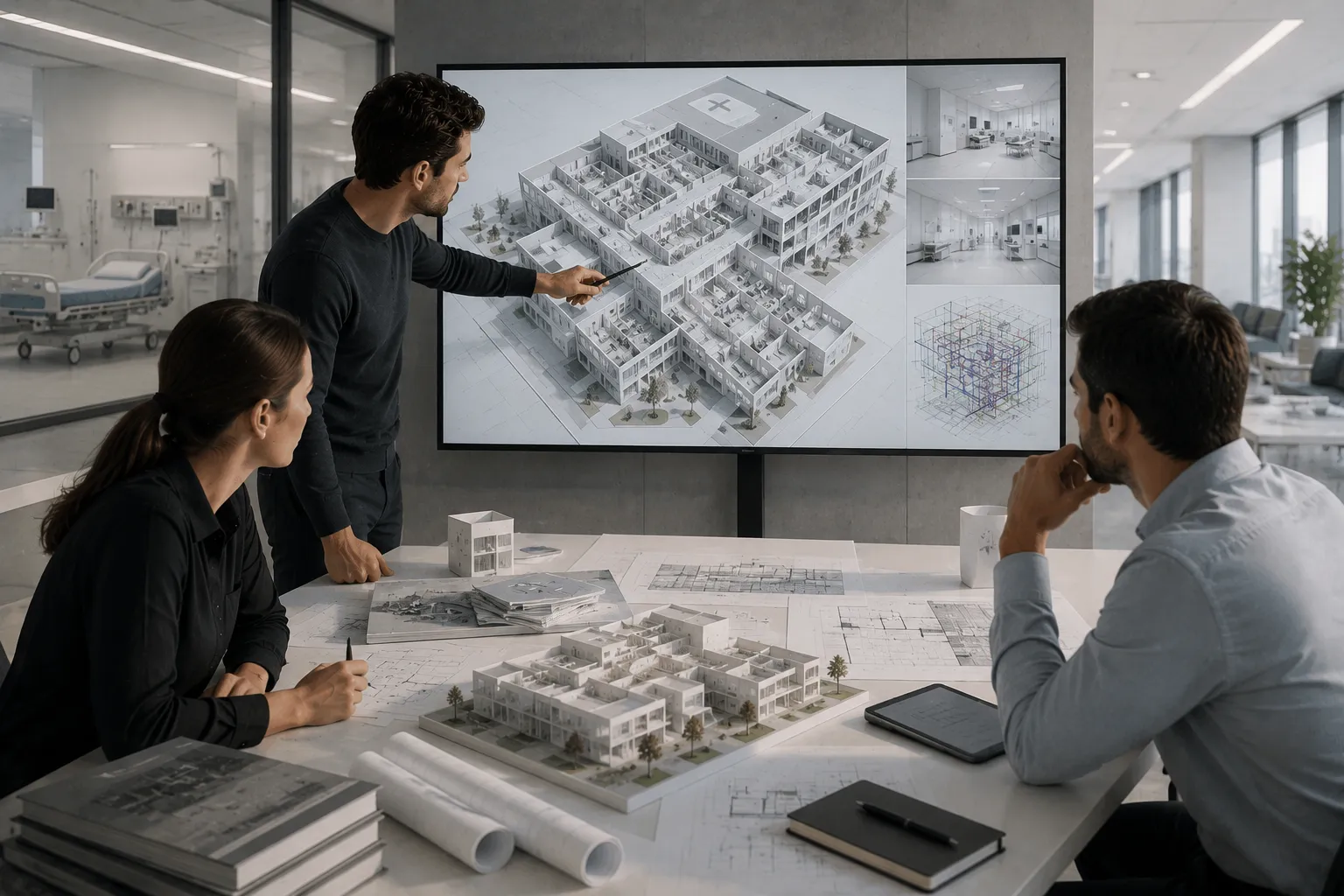
Once all trade models are collected, combine them into federated models and run automated clash detection identifying every geometric conflict.
Model Federation:
Combine individual trade models into single coordinated model:
- Architectural Revit model provides building geometry context
- Structural Revit/Tekla model shows beams, columns, slabs, walls
- Mechanical model shows all HVAC systems
- Electrical model shows all electrical systems
- Plumbing/fire model shows all wet services
All models align in a common coordinate system ensuring accurate spatial relationships.
Clash Detection Process:
Run automated clash detection software (Navisworks, BIM 360, Solibri, or similar) analyzing every intersection between elements from different disciplines.
The software systematically checks:
- Mechanical systems vs. structure
- Electrical systems vs. structure
- Plumbing/fire systems vs. structure
- Mechanical vs. electrical
- Mechanical vs. plumbing/fire
- Electrical vs. plumbing/fire
- All systems vs. architectural clearances
First-run clash detection typically identifies 800-2,500 clashes on commercial projects. Many are minor or false positives, but systematic identification ensures nothing is missed.
Clash Categorization:
Review identified clashes categorizing by severity and resolution approach:
Critical clashes (Priority 1): Major conflicts requiring design changes. Examples: main ductwork through primary beams, major equipment locations conflicting with structure, fire-rated penetrations compromising compartmentation. These require immediate attention and design team involvement.
Moderate clashes (Priority 2): Conflicts requiring resolution but with straightforward solutions. Examples: minor pipe/conduit spacing adjustments, support location modifications, routing refinements. Trade coordination meetings can typically resolve these.
Minor clashes (Priority 3): Small clearance issues or modeling tolerances. Examples: insulation thickness overlaps, minor clearance reductions still meeting code minimums. Many don't require action beyond documentation.
False positives: Software-identified clashes that aren't real conflicts. Examples: intentional penetrations flagged as clashes, temporary construction elements, modeling artifacts. These get marked as reviewed and accepted.
Prioritization focuses coordination effort on genuine issues requiring resolution.
Step 3: Conduct Multi-Trade Coordination Meetings (Week 3-4)
Resolve identified clashes through collaborative coordination meetings bringing all trades together.
Meeting Structure:
Schedule coordination meetings with all affected trades, design team representatives, and builder coordination lead. For large projects, conduct separate meetings for different building areas or systems to keep meetings focused and productive.
Effective meetings run 2-3 hours maximum. Longer meetings lose productivity as participants fatigue. Schedule multiple meetings if needed rather than marathon sessions.
Meeting Agenda:
Review clash report focusing on Priority 1 and 2 clashes. Display federated 3D model showing each clash spatially. Discuss resolution options collaboratively. Document agreed resolution approach for each clash. Assign responsibility for implementing resolutions (which trade adjusts their routing). Establish a timeline for model updates reflecting resolutions.
Resolution Decision Framework:
When multiple resolution approaches exist, apply systematic decision framework:
Primary systems (structure, major HVAC mains) have priority; secondary systems adjust. Trades installing first often have priority (early trades shouldn't redesign around later trades). Consider cost and complexity of different resolution approaches (minor pipe reroute vs. major duct modifications). Evaluate performance impacts of different solutions (duct size reductions affecting capacity). Assess future access and maintenance implications.
Document decisions clearly prevent future disputes about what was agreed.
Common Challenge: Trades disagreeing about who should modify their work
When trades dispute who should adjust, builders must make definitive decisions based on the framework above. Clear contract language establishing coordination hierarchy prevents most disputes. When uncertainty exists, the builder makes the final call in the project's best interest.
Step 4: Document Resolutions and Update Models (Week 4-5)
Coordination decisions must translate into updated models reflecting agreed changes.
Model Update Requirements:
Each trade updates their model reflecting coordination meeting decisions. Modified ductwork routes, adjusted pipe routing, relocated equipment, modified support locations, and clearance adjustments all get incorporated.
Establish a clear deadline for model updates (typically 1 week after coordination meeting).
Verification:
After trades update models, rerun clash detection confirming resolutions haven't created new conflicts. Iterative coordination continues until clash detection shows only minor acceptable clashes and false positives.
Typically requires 2-4 coordination cycles:
- Cycle 1: Initial clash detection finding 800-2,500 clashes
- Cycle 2: Post-resolution clash detection finding 200-600 remaining clashes
- Cycle 3: Second resolution clash detection finding 50-150 remaining clashes
- Cycle 4: Final verification finding 10-30 acceptable minor clashes
Each cycle resolves conflicts but sometimes creates new ones requiring additional coordination.
Documentation:
Maintain comprehensive coordination documentation:
- Clash reports from each detection cycle
- Meeting minutes documenting resolution decisions
- Responsibility matrix showing who agreed to modify what
- Updated coordination schedule tracking progress
This documentation provides accountability trail and evidence of coordination process for future reference or dispute resolution.
Step 5: Produce Coordinated Installation Drawings (Week 5-6)
The final coordination step produces installation drawings showing all MEP systems in coordinated locations.
Coordinated Drawing Types:
Composite MEP plans: Multi-trade drawings showing all mechanical, electrical, and plumbing systems overlaid. These show how all services fit together in ceiling spaces, risers, and plant rooms. Produced at appropriate scales (1:50 or 1:100 typical) with clear line weight and color coding distinguishing different trades.
Vertical coordination sections: Sections through typical ceiling spaces showing floor-to-floor services stacking. These clearly indicate vertical clearances, service layer sequencing, and relationship to structure and architecture.
Congested area coordination plans: Detailed plans for particularly congested areas (plant rooms, risers, main corridor ceiling spaces) showing precise routing and clearances.
Installation sequence diagrams: For complex areas, diagrams indicating installation sequence ensuring trades don't block others' access.
Drawing Distribution:
Distribute coordinated installation drawings to all trades before mobilization. These become the authority for installation superseding individual trade shop drawings where conflicts existed.
Clearly mark coordinated drawings distinguishing them from original design documentation. Include coordination notes explaining resolution decisions where relevant.
Field Reference:
Ensure coordinated drawings are available on-site for trade reference during installation. When field questions arise about coordination, refer to coordinated drawings showing agreed solutions.
Essential Tools and Technology
MEP coordination requires specific software and technology capabilities.
BIM Coordination Software:
Autodesk Navisworks: Industry-standard clash detection and coordination platform. Handles large multi-discipline models effectively. Strong visualization and clash reporting. Cost: $3,000-4,500 annually per license.
Autodesk BIM 360 Coordinate: Cloud-based coordination platform enabling distributed team access. Real-time clash detection and issue tracking. Collaboration features for coordination meetings. Cost: $600-1,000 per user annually.
Solibri Office: Strong rule-based checking and coordination. Particularly effective for code compliance verification alongside clash detection. Cost: $3,500-5,000 annually per license.
Most builders engaging professional coordination services don't need to purchase these tools themselves. A coordination specialist provides software as part of service.
Model Viewing and Collaboration:
Autodesk Viewer (free): Basic model viewing for reviewing federated models and coordination reports.
BIM Track: Cloud-based issue tracking specifically designed for coordination workflows. Enables distributed coordination with accountability tracking.
Hardware Requirements:
Clash detection and model coordination requires capable computers:
- Minimum 32GB RAM (64GB preferred for large projects)
- Dedicated graphics card (NVIDIA RTX or similar)
- SSD storage for model file performance
- Large display (27" minimum, dual displays ideal for coordination meetings)
Technology Investment Costs:
For builders establishing internal coordination capability:
- Software licenses: $5,000-8,000 annually
- Hardware (coordination workstation): $3,500-5,500
- Training and skill development: $4,000-8,000
- Total setup: $12,500-21,500 plus ongoing $5,000-8,000 annually
Alternative: Engage professional coordination services ($35,000-75,000 per project typical) avoiding capital investment while accessing expert capability.
Coordination Responsibility: Who Does What
Clear responsibility assignment prevents coordination gaps.
Builder's Coordination Role:
Builders typically maintain overall coordination responsibility ensuring it happens, tracking progress, and making final decisions when disputes arise. Specific responsibilities include:
- Requiring 3D models from all trades in subcontracts
- Engaging coordination specialist (internal team or external service)
- Scheduling and facilitating coordination meetings
- Enforcing resolution implementation and model updates
- Approving final coordinated installation drawings
- Monitoring field installation matches coordinated design
Design Consultant Responsibilities:
Architectural and engineering consultants have coordination obligations varying by contract terms. Typical consultant responsibilities include:
- Reasonable coordination between their own disciplines
- Participation in builder-led coordination process
- Review and approval of trade resolutions affecting their designs
- Design modifications required to resolve conflicts
- Updated documentation reflecting coordination outcomes
Trade Contractor Obligations:
MEP trade contractors must actively participate in coordination. Subcontracts should explicitly require:
- Provision of accurate 3D models by specified deadline
- Participation in coordination meetings
- Implementation of agreed coordination resolutions
- Model updates reflecting changes
- Installation per coordinated drawings
Third-Party Coordination Specialists:
Many builders engage professional coordination services (like Obelisk) providing:
- Model collection and quality verification
- Clash detection analysis and reporting
- Coordination meeting facilitation
- Resolution documentation and tracking
- Production of coordinated installation drawings
- Ongoing construction support
Professional coordinators bring expertise, software capabilities, and dedicated focus ensuring thorough coordination without diverting builder's project management resources.
Common MEP Coordination Challenges (And How to Overcome Them)
Anticipating challenges enables proactive mitigation.
Challenge: Trades Resistant to Providing Models
Some trades, particularly smaller contractors, resist modeling requirements claiming they don't work that way or it's too expensive.
Solutions:
- Make modeling a non-negotiable contract requirement stated upfront in tender documents
- Allow trades to engage third-party modelers if they lack internal capability
- Explain coordination benefits the trade by preventing rework they'd otherwise absorb
- Show examples of prevented conflicts demonstrating value
- Consider allowing slightly higher pricing to cover modeling costs (still far cheaper than conflict costs)
Challenge: Model Quality and Accuracy Issues
Models provided by trades sometimes lack necessary detail or accuracy undermining coordination effectiveness.
Solutions:
- Establish clear modeling standards specifying required detail level
- Provide templates and examples showing expected quality
- Review models immediately upon receipt identifying quality issues early
- Reject insufficient models requiring resubmission before proceeding
- Consider quality requirements in trade selection and prequalification
Challenge: Tight Pre-Construction Timelines
Compressed schedules pressure coordination timeframes creating temptation to skip or minimize coordination.
Solutions:
- Build coordination duration into project schedules from planning stage
- Start model collection early in contract discussions before formal construction start
- Prioritize coordination for critical areas if comprehensive coordination isn't achievable
- Communicate trade-off to stakeholders: inadequate coordination now means expensive conflicts later
Challenge: Legacy Projects Without BIM
Older projects designed before BIM adoption lack 3D models complicating coordination.
Solutions:
- Create basic 3D models from 2D documentation for coordination purposes
- Focus coordination on highest-risk areas (ceiling spaces, plant rooms, risers)
- Engage trades early requiring them to model their scope regardless of consultant delivery
- Accept higher residual conflict risk but coordinate what's achievable
Measuring Success: MEP Coordination ROI
Quantifying coordination value demonstrates the business case.
Conflict Reduction Statistics:
Based on 200+ coordinated Australian construction projects:
Projects without systematic coordination: Average 18-25 significant MEP conflicts Projects with comprehensive coordination: Average 1-3 conflicts (90-95% reduction)
Remaining conflicts typically arise from unforeseen site conditions, as-built variations from design, trade means and methods decisions, or late design changes after coordination completion.
Cost Savings Quantification:
For $8M commercial project:
- Prevented conflicts: 20 (from typical 22 down to 2)
- Cost per conflict: $21,000 average
- Total prevented cost: $420,000
- Coordination investment: $65,000
- Net savings: $355,000
- ROI: 546%
Schedule Improvement:
Beyond direct cost savings, coordination prevents schedule delays. Projects experiencing significant MEP conflicts typically run 8-15% over planned schedule. Well-coordinated projects typically run 0-5% over schedule with coordination issues representing minor delay contributors.
For 52-week construction program:
- Uncoordinated project: 56-60 weeks actual (4-8 weeks delay)
- Coordinated project: 52-55 weeks actual (0-3 weeks delay)
- Schedule improvement: 1-5 weeks
Quality and Relationship Benefits:
Quantifying is difficult, but coordination improves:
- Trade relationships (fewer disputes and blame situations)
- Client satisfaction (fewer visible compromises and issues)
- Building quality (systems installed as designed, not compromised by conflicts)
- Future project opportunities (strong delivery performance)
These intangible benefits add value beyond direct cost savings.
FAQ: MEP Coordination for Builders
How much does MEP coordination cost?
Professional MEP coordination services typically cost $35,000-75,000 for commercial projects depending on size and complexity. This represents approximately 0.4-0.9% of construction value for $8-10M projects. Coordination prevents $150,000-500,000 in typical conflict costs providing 4:1 to 8:1 return on investment. Coordination costs are project expenses billable to the owner in most contract structures. Compare coordination investment against historical conflict costs on similar projects to assess value for your situation.
How long does MEP coordination take?
Complete 5-step coordination process typically requires 5-7 weeks from initial model collection through final coordinated drawings. This assumes trade models are ready when requested. If trades need time to create models, add 3-4 weeks. Total timeline including trade model creation: 8-11 weeks. This coordination period overlaps with other pre-construction activities (procurement, shop drawing review, mobilization) so doesn't necessarily extend the overall project schedule. Plan coordination to complete before first MEP trade mobilizes on-site.
Can we do coordination ourselves or must we hire specialists?
Builders can perform coordination internally with appropriate investment in software, hardware, and staff training. This makes sense for builders doing multiple projects annually justifying capital investment and developing internal expertise. For occasional coordination needs, engaging professional coordination services proves more economical accessing expert capability without capital investment. Many builders use a hybrid approach: internal coordination for smaller projects, professional services for large complex projects requiring advanced capabilities.
What if trades won't provide 3D models?
Model provision must be a contract requirement, not an optional request. Include specific modeling requirements in subcontract agreements stating trade must provide 3D models to specified standards by specified deadline. Make this clear in tender documentation so trades price accordingly. If trade is non-compliant after contract signing, enforce contract requirements. Ultimately, if trade refuses modeling, consider whether you want that trade on your project given coordination importance. Trade's unwillingness to participate in coordination signals potential future cooperation issues.
Does coordination eliminate all conflicts?
No. Comprehensive coordination typically eliminates 90-95% of conflicts but not 100%. Remaining conflicts arise from unforeseen site conditions not reflected in design, as-built variations from documented design, trade means and methods decisions made during installation, late design changes after coordination completion, or human error in coordination process. While coordination doesn't guarantee zero conflicts, reducing from 20-25 conflicts to 1-3 conflicts represents transformational improvement. Perfect is the enemy of good; 90-95% reduction is an achievable goal.
Implementing MEP Coordination on Your Projects
MEP conflicts represent one of the most expensive yet preventable sources of construction delays and cost overruns. For builders managing commercial projects, systematic MEP coordination provides clear return on investment preventing $150,000-500,000 in typical conflict costs for $35,000-75,000 coordination investment.
The 5-step coordination process provides builders with actionable methodology: collect complete 3D models from all MEP trades, run comprehensive clash detection analysis, conduct multi-trade coordination meetings resolving identified conflicts, document resolutions and update models, and produce coordinated installation drawings. This systematic approach identifies and resolves 90-95% of MEP conflicts before construction begins.
Key implementation success factors include making 3D model provision a non-negotiable contract requirement, engaging professional coordination services or developing internal capability, allocating adequate pre-construction time for thorough coordination, establishing clear responsibility for coordination across builders, consultants, and trades, and measuring results quantifying prevented conflicts and protected margins.
For builders experiencing MEP conflicts on current projects or planning larger projects where coordination value is clear, implementing systematic coordination transforms reactive crisis management into proactive problem prevention. The choice is coordinating proactively before construction at controlled cost or resolving conflicts reactively during construction at much higher cost with schedule delays and relationship damage.
Obelisk has provided comprehensive MEP coordination services for 200+ Australian construction projects, identifying and resolving 15,000+ conflicts before site installation. Our systematic 5-step process, experienced coordination specialists, and construction-focused approach help builders eliminate preventable MEP conflicts protecting schedules and margins.
Stop Losing Money to MEP Conflicts
Obelisk provides comprehensive MEP coordination services eliminating 90-95% of on-site conflicts before construction begins.
✓ Complete Clash Detection: Systematic identification of all MEP coordination conflicts
✓ Multi-Trade Coordination: Facilitated resolution meetings with all services trades
✓ Coordinated Installation Drawings: Construction-ready documentation showing resolved layouts
✓ Australian Projects Expertise: 200+ coordinated projects across commercial, residential, mixed-use
✓ Proven ROI: Average $355,000 net savings on $8M projects through prevented conflicts
✓ Builder-Focused Service: Understanding construction schedules, budgets, and constraints
We help Australian builders protect margins by preventing costly MEP conflicts.
Schedule Coordination Consultation: team@obelisk.au
Eliminate MEP conflicts before they cost you $150K-500K in rework and delays.
TABLE OF CONTENTS

























.png)
.png)
.webp)