


Last-Minute Construction Documentation Changes: Emergency Response Guide

Your construction crew is on site. Equipment is running. The clock is ticking. Then it happens: the design doesn't work as documented, the client demands changes, or the certifier requires modifications before you can proceed. Your team stops work while you wait for updated documentation.
Every hour of delay costs money. Idle crews, equipment rental, schedule compression, and domino effects on subsequent trades add up fast. For a typical commercial construction project, documentation delays cost between $5,000 and $15,000 per day. A week-long delay can exceed $80,000 in direct and indirect costs.
This guide provides construction managers and builders with an emergency response protocol for last-minute documentation changes. You'll learn what actions to take immediately, how to engage fast-track documentation support, and how to minimize financial impact while waiting for updated drawings.
Facing a documentation emergency right now? Obelisk's rapid response team delivers updated construction drawings in 24-48 hours. Contact us immediately: team@obelisk.au
Why Last-Minute Documentation Changes Happen
Understanding why documentation emergencies occur helps builders respond effectively and prevent future crises.
Design Coordination Issues Discovered On-Site
Coordination problems often remain hidden until construction begins. Structural elements clash with MEP services. Door swings conflict with furniture layouts. Beam depths reduce ceiling heights below code requirements. Site dimensions don't match design assumptions.
These issues exist in the documentation but only become apparent when trades attempt to install their work. What looked fine on paper creates conflicts in three-dimensional reality.
Client Changes During Construction
Clients see their building taking physical form and request modifications. Room layouts need adjustment. Finishes change based on actual samples. Equipment specifications update based on updated operational requirements. Tenant fit-out needs evolve before completion.
Even with rigorous change control processes, some modifications are approved during construction, requiring immediate documentation updates.
Authority and Certifier Requests
Building certifiers and council authorities sometimes identify compliance issues during inspections that require documentation modifications. Fire safety details need clarification. Accessibility provisions require enhancement. Structural connections need additional detail. Energy efficiency calculations require verification.
These requests often come with tight deadlines tied to inspection schedules and construction milestones.
Unforeseen Site Conditions
Despite thorough pre-construction investigation, sites reveal surprises. Underground services appear in unexpected locations. Existing structures contain hidden elements. Soil conditions differ from geotechnical reports. Adjacent buildings create unforeseen constraints.
These discoveries force design adaptations requiring updated documentation before work continues.
The True Cost of Documentation Delays in Construction
Documentation delays create cascading financial impacts beyond obvious idle time costs.
Direct Costs: Idle Crew and Equipment
When work stops waiting for documentation, direct costs accumulate immediately:
- Construction crew wages: $3,000-6,000 per day for a typical crew (6-12 workers)
- Equipment rental: $1,000-3,000 per day for excavators, cranes, lifts
- Site overheads: $500-1,000 per day for site facilities, security, utilities
- Supervision costs: $1,000-2,000 per day for project managers and supervisors
For a moderate-sized commercial project, direct daily delay costs typically range from $5,000 to $12,000. Larger projects with multiple crews and heavy equipment can exceed $20,000 per day.
Indirect Costs: Schedule Compression and Domino Effects
Documentation delays create indirect costs that often exceed direct expenses:
Schedule compression: Making up lost time requires overtime, additional crews, or expedited material delivery at premium pricing. This can add 20-40% to affected trade costs.
Subsequent trade delays: Following trades scheduled to start encounter delays through no fault of their own. Contractual claims and relationship damage result. Coordination complexity increases as compressed schedules overlap trades originally sequenced separately.
Extended preliminaries: Site establishment costs extend beyond the planned duration. Head contractor preliminaries, temporary works, and site management costs continue accruing.
Client relationship damage: Delays frustrate clients and damage the builder's reputation. Future project opportunities diminish. Repeat business becomes unlikely.
Real-World Example
A Brisbane builder encountered structural documentation issues three weeks into a $4.2M commercial fit-out. Beam locations conflicted with the client's equipment requirements, requiring structural redesign. The builder's original architect couldn't provide updated structural drawings for six days due to competing commitments.
Delay costs during those six days:
- Direct costs: $48,000 (8 crew members, equipment, overheads)
- Schedule compression costs: $23,000 (overtime and expedited delivery to recover time)
- Following trade delays: $12,000 (claimed by services subcontractor for idle time)
- Total impact: $83,000
The builder eventually engaged emergency documentation support, delivering updated drawings in 36 hours, but by then four days had elapsed. Had emergency support been engaged immediately, the builder could have saved approximately $50,000 in delay costs.
This example illustrates why rapid response to documentation crises matters financially. The cost of emergency documentation support is typically 5-10% of the delay costs it prevents.
Emergency Response Protocol: What to Do When Documentation Changes Hit
When documentation issues stop your construction, a systematic response minimizes delay and cost impacts.
Immediate Actions (First 2 Hours)
Take these actions within the first two hours of identifying documentation issues:
Document the Issue Completely
Photograph the problem from multiple angles, showing why work cannot proceed. Record dimensions, reference existing conditions, and capture context. Document what trades are affected and what work has stopped.
Detailed documentation serves multiple purposes. It provides a visual reference for whoever updates drawings. It supports any delay claims if applicable. It creates a record of issue discovery for project records.
Assess Impact and Urgency
Determine how many crews are affected and for how long. Identify whether this is critical path work or if other activities can continue. Calculate daily delay costs to justify response investment.
Ask these questions:
- Can any crews continue with unaffected work?
- What is the latest date by which updated documentation must arrive to avoid delaying subsequent trades?
- What is the financial impact per day of delay?
- Are there contractual implications for this delay?
Understanding urgency and impact guides your response strategy.
Contact Original Design Team
Notify the project architect or engineer immediately. Explain the issue clearly, referencing documented evidence. Request turnaround timeline for updated documentation.
If the original design team cannot respond within your required timeframe, you need alternative solutions immediately. Don't wait days hoping for a response that doesn't arrive.
Identify Alternative Work
Determine what construction activities can continue while waiting for documentation updates. Can other areas of the project advance? Can material procurement or prefabrication for later stages proceed? Can preliminary work for subsequent activities begin?
Keeping crews productive on alternative work reduces idle time costs while documenting updates.
Documentation Triage: What's Critical vs. What Can Wait
Not all documentation issues require the same urgent response.
Critical Path Issues Requiring Immediate Resolution:
Issues stopping critical path activities demand the fastest possible response:
- Structural elements preventing subsequent framing or cladding
- Services coordination affecting multiple trades in sequence
- Fire safety or accessibility compliance is blocking the occupation certificate
- Foundation or slab issues are preventing vertical construction
These issues justify premium emergency documentation services because delay costs far exceed service costs.
Important But Non-Critical Issues:
Issues affecting non-critical path work can often accept a slightly longer turnaround:
- Finish details in areas not immediately required
- Minor coordination adjustments in later project phases
- Documentation clarifications for future milestones
- Enhanced details for elements not yet fabricated
Standard expedited documentation services (3-5 day turnaround) often suffice for these situations.
Documentation That Can Follow Normal Timeframes:
Some requests don't require expedited response:
- As-built drawing updates for completed work
- Additional details for future project stages
- Optional enhancements or improvements
- Documentation supporting future maintenance
Standard documentation processes handle these appropriately without premium urgency costs.
Engaging Emergency Documentation Support
When original design teams cannot meet required timeframes, emergency documentation support becomes essential.
What Emergency Documentation Services Provide:
Professional emergency documentation support offers:
24-48 hour turnaround for urgent construction documentation Structural, architectural, and services coordination updates. Australian standards compliance (AS 1100, BCA requirements), Coordination with original design documents, Certifier and authority-ready documentation, Clear communication throughout the rapid turnaround process
These services specifically serve construction emergencies where speed is paramount, and quality cannot be compromised.
Information You Need to Provide:
Emergency documentation services require specific information to work efficiently:
Original documentation files (Revit, CAD, or PDFs of current drawings), Clear description of required changes with measurements and photos, Site conditions or constraints affecting the solution, Any building authority or certifier requirements that must be met, Contact details for coordination questions during documentation, Required delivery format and method, Deadline for documentation delivery
Providing complete information upfront prevents delays from back-and-forth clarification requests.
How the Rapid Response Process Works:
Understanding the process helps set realistic expectations:
Hour 0-2: Initial consultation and information gathering. Emergency documentation team reviews your requirements, assesses the scope, confirms the feasibility of the timeframe, and provides a cost estimate. You approve the scope and cost to proceed.
Hour 2-8: Detailed design development and coordination. Team develops a solution addressing your requirements while maintaining coordination with existing documentation. Draft solutions shared for your review and input.
Hour 8-24: Documentation production and quality assurance. Full documentation set produced to Australian standards. Internal quality review ensures accuracy and completeness. Draft documentation shared for your review.
Hour 24-36: Final adjustments and delivery. Any minor adjustments based on your feedback will be incorporated. Final documentation delivered in the required format. Support is provided for any clarification questions.
This compressed timeline requires focused effort and clear communication, but delivers quality documentation meeting construction and compliance requirements.
Site Management While Waiting for Updates
While documentation updates progress, effective site management minimizes delay impacts.
Optimize Available Work:
Maximize productivity on activities not requiring updated documentation. Deploy crews to other project areas. Advance material procurement. Complete preparatory work for future stages.
Consider parallel activities that add value:
- Site cleanup and organization improve efficiency when work resumes
- Equipment maintenance prevents future breakdowns
- Material inventory and organization
- Planning and coordination meetings for upcoming work
- Safety training or toolbox talks
Productive alternative activities reduce the financial impact of unavoidable documentation delays.
Communication Management:
Keep stakeholders informed throughout the process. Update clients on the situation, response actions, and timeline expectations. Inform affected subcontractors of the delay duration and restart timing. Document all communications for project records.
Clear communication manages expectations and maintains relationships despite challenging circumstances.
Preparation for Work Resumption:
Use downtime to prepare for efficient work resumption when updated documentation arrives. Ensure materials are ready and accessible. Confirm crew availability for restart. Pre-position equipment for immediate deployment. Review work sequences to recover time efficiently.
Preparation during forced delays enables faster productivity recovery when documentation issues are resolved.
How Fast-Track Documentation Services Work
Understanding fast-track documentation processes helps builders set appropriate expectations and provide optimal information.
The 24-48 Hour Turnaround Reality:
Legitimate 24-48 hour turnaround means calendar hours from information receipt to documentation delivery. This excludes time waiting for complete information from the builder. If you provide information at 2 pm Wednesday, documentation delivery occurs by 2 pm Thursday (24 hours) or 2 pm Friday (48 hours).
This turnaround is achievable for typical construction documentation update,s including:
- Structural modifications within existing systems
- Architectural layout and detail changes
- Services coordination adjustments
- Compliance documentation updates
- Site condition adaptations
More complex redesigns requiring engineering calculations, authority approvals, or extensive coordination may require longer timeframes. Reputable emergency services communicate realistic timelines upfront rather than over-promising and under-delivering.
Quality Assurance Under Time Pressure:
Fast turnaround doesn't mean compromised quality. Professional emergency documentation services maintain quality through:
Experienced staff assigned to urgent work who work efficiently without sacrificing accuracy. Systematic quality review processes even under compressed timelines. Focus on critical elements first, ensuring essentials are correct. Clear communication channels, preventing misunderstandings that cause rework, Australian standards compliance (AS 1100, BCA), is maintained regardless of urgency
Quality emergency documentation is usable immediately without requiring corrections that would negate speed benefits.
Cost Expectations:
Emergency documentation services carry premium pricing reflecting urgency, priority, and focused resource allocation. Typical pricing structures include:
Standard hourly rates with urgency multiplier (1.5x-2x standard rates) Fixed urgent response fees based on scope assessment, and minimum charge structures ensuring viability for service providers
For perspective, spending $3,000-8,000 on emergency documentation that prevents $50,000-80,000 in delay costs provides a clear positive return on investment. View emergency documentation as insurance against substantially larger delay costs.
After-Hours and Weekend Response:
True emergency documentation support includes after-hours and weekend availability. Construction issues don't respect business hours. Services are committed to genuine emergency response staff appropriately for off-hours requests.
Confirm availability expectations upfront. Some services advertise "emergency" support but only respond during standard business hours, creating a misleading delay in actual urgent situations.
Preventing Future Documentation Emergencies
While emergency response protocols mitigate damage when crises occur, prevention strategies reduce emergency frequency.
Enhanced Pre-Construction Coordination:
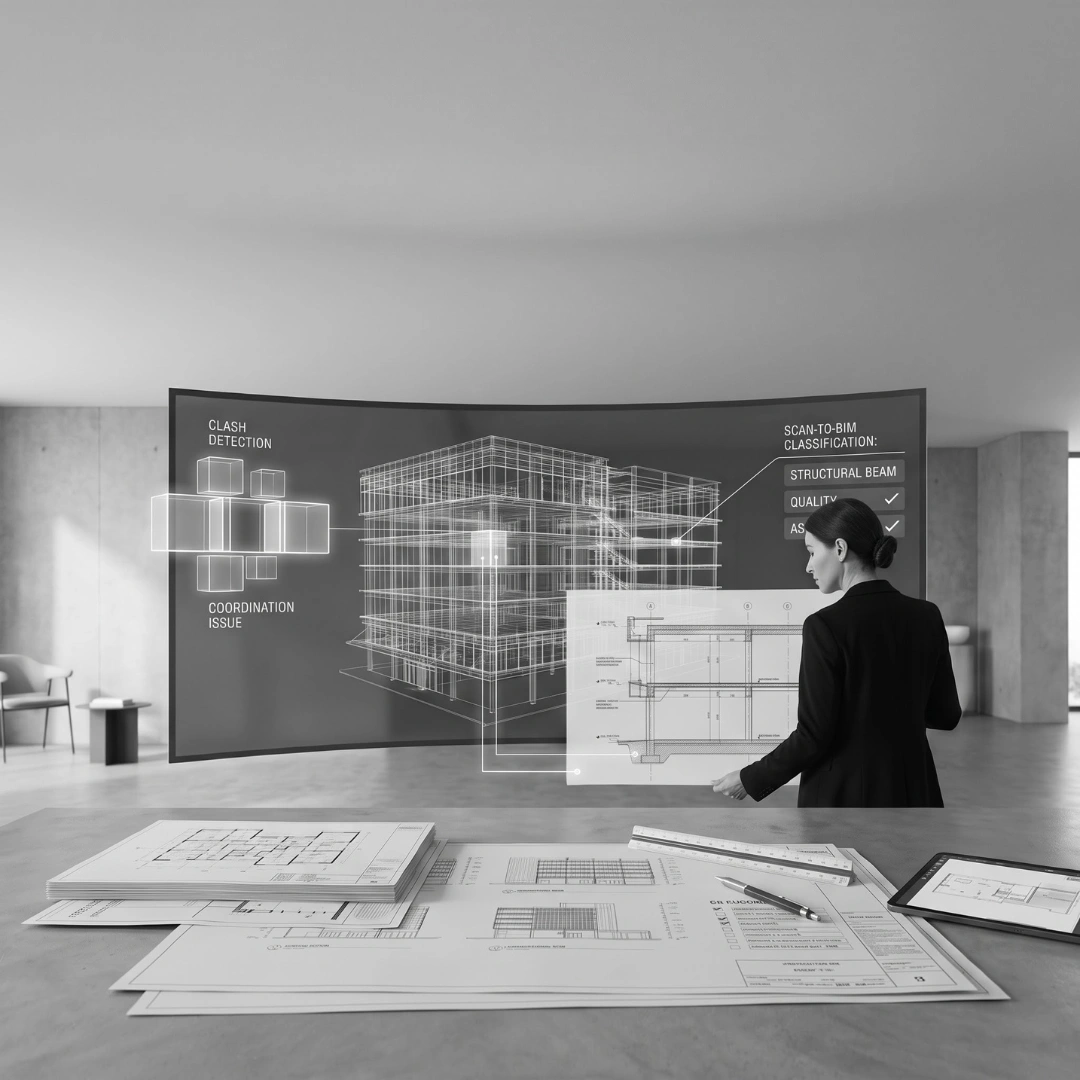
Invest in thorough coordination before construction begins. Detailed coordination meetings with all trades identify conflicts before they reach the site. BIM coordination and clash detection reveal issues in the virtual environment, where resolution is inexpensive.
The cost of enhanced pre-construction coordination is substantially lower than resolving issues during construction under time pressure.
Buffer Time in Construction Schedules:
Build modest buffer time into schedules for inevitable documentation adjustments. Compressed schedules with zero tolerance for issues create frequent crises. Realistic schedules acknowledging that some adjustments will occur reduce emergency response needs.
Buffer doesn't mean padding schedules unrealistically. It means acknowledging the reality that construction rarely proceeds exactly as documented despite best planning efforts.
Relationships With Responsive Documentation Partners:
Establish relationships with documentation providers before emergencies occur. Know who can respond rapidly when needed. Understand their capabilities, typical turnaround times, and pricing structures. Pre-qualify emergency documentation support as part of project risk management.
When a crisis hits, you have vetted contacts ready to respond immediately rather than scrambling to find unknown providers under pressure.
Clear Change Control Processes:
Implement systematic change control processes documenting when changes occur, what documentation updates they require, and who is responsible for updates. Clear processes reduce confusion when changes arise and ensure documentation updates happen promptly rather than becoming emergencies when construction reaches affected areas.
Regular Design Team Engagement:
Maintain regular communication with design teams throughout construction. Early heads-up about potential issues allows designers to prepare solutions before they become urgent. Collaborative relationships where designers understand construction priorities improve response when updates are needed.
FAQ: Emergency Documentation Questions
How fast can emergency documentation actually be delivered?
For typical construction documentation updates, 24-48 hours from receiving complete information is achievable. Simple revisions or clarifications can sometimes be completed within 12-24 hours. Complex redesign requiring engineering analysis or extensive coordination may require 3-5 days. Reputable emergency services provide realistic timeframes based on a specific scope rather than promising unrealistic turnarounds. Always confirm the specific timeframe for your situation during the initial consultation.
What if the emergency documentation contains errors?
Professional emergency documentation services include revision support if errors occur. Clarify revision terms upfront - how long after delivery are corrections provided, and are corrections included in original pricing or additional? Quality emergency providers stand behind their work and correct errors promptly. However, changes to your requirements after documentation is produced (scope changes rather than errors) typically incur additional costs.
Can emergency documentation services coordinate with our certifier or building authority?
Yes, experienced emergency documentation providers understand Australian building authority and certifier requirements. They can prepare documentation meeting specific authority requirements and coordinate directly with certifiers if needed. Inform the documentation team upfront about any specific authority requirements so documentation is prepared the first time appropriately. Some authorities have specific submission formats or detailed requirements that must be accommodated.
How much does emergency documentation support cost?
Emergency documentation costs vary based on scope complexity and urgency. Typical pricing includes base scope costs plus urgency premium (1.5x-2x standard rates). Simple revisions might cost $2,000-4,000. Moderate complexity updates typically range from $4,000 to $8,000. Complex coordination or redesign can exceed $10,000. Request specific quotes based on your situation. Compare emergency documentation costs against delay costs ($5,000-15,000 per day) to assess value.
What information do I need to provide for the fastest turnaround?
Provide complete information upfront to enable the fastest turnaround: original documentation files in native format (Revit, CAD) or high-quality PDFs; detailed photos of site conditions and issues from multiple angles; precise measurements and dimensions; a clear description of required changes; any building authority or certifier requirements; required delivery format and method; your contact details for questions. Complete information prevents delays from follow-up clarification requests.
When Every Hour Counts
Last-minute construction documentation changes create high-pressure situations where every hour of delay costs thousands of dollars. The emergency response protocol outlined in this guide provides builders with systematic actions to minimize delay impacts when documentation crises occur.
Key strategies include immediate documentation of issues and impact assessment, rapid engagement of emergency documentation support when original designers cannot meet timeframes, effective site management maximizing alternative work while waiting for updates, and establishing prevention strategies to reduce future emergency frequency.
While prevention through enhanced coordination and realistic scheduling reduces emergency frequency, construction's unpredictable nature means documentation crises will occasionally occur despite the best planning. Having rapid response protocols and pre-qualified emergency documentation partners transforms potentially catastrophic delays into manageable disruptions.
Obelisk has provided emergency documentation support for 200+ Australian construction projects since 2010, delivering updated drawings in 24-48 hours when builders face last-minute changes. Our rapid response process, systematic quality assurance, and understanding of Australian construction requirements help builders minimize delay costs while maintaining documentation quality.
When construction crews are waiting, and costs are mounting, responsive documentation support transforms crisis into continuity. The difference between six-day delays costing $80,000 and two-day delays costing $25,000 is immediate access to emergency documentation capability.
Facing a Construction Documentation Emergency?
Obelisk provides 24-48 hour emergency documentation services for Australian builders experiencing last-minute construction changes.
✓ Rapid Response: 24-48 hour turnaround for urgent construction documentation
✓ Australian Standards: AS 1100, BCA, and authority-compliant documentation
✓ All Disciplines: Architectural, structural, and services coordination updates
✓ Quality Assured: Systematic checking despite compressed timelines
✓ Clear Communication: Direct contact throughout the urgent response process
✓ Construction Focus: Understanding site constraints and builder requirements
We help Australian builders avoid costly construction delays when documentation emergencies occur.
📧 Urgent Documentation Request: team@obelisk.au
Don't let documentation delays cost you $5,000-15,000 per day. Contact our rapid response team now.
TABLE OF CONTENTS





















.png)
.png)
.webp)