


Digital Twin Technology for Buildings: Practical Implementation Guide 2026
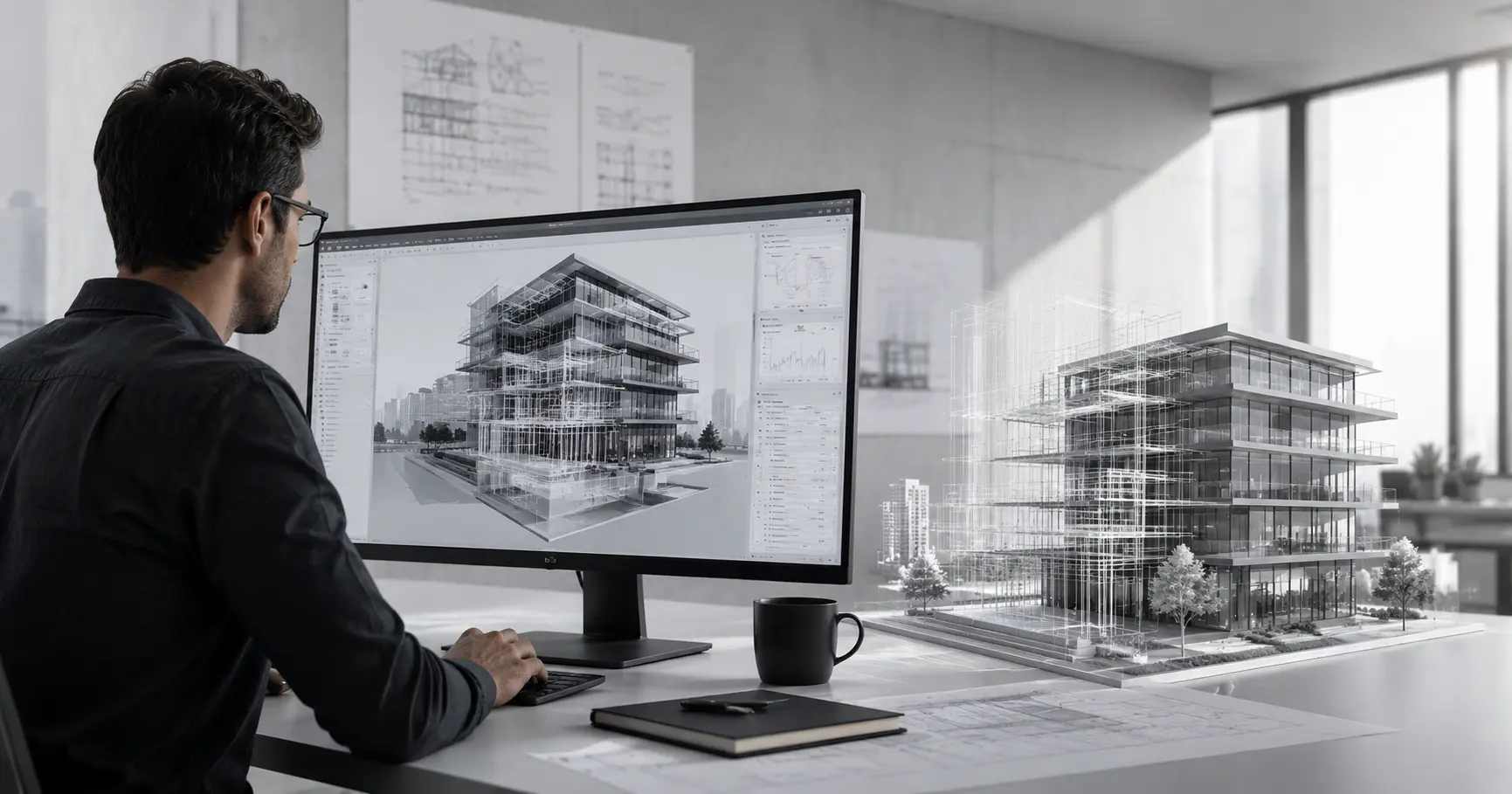
Digital twin technology has evolved from aerospace and manufacturing into building and construction, transforming how we design, construct, and operate built assets. What began as a futuristic concept in 2018-2020 has matured into a practical reality in 2026, with Australian property owners, developers, and facility managers implementing digital twins to optimize operations, support sustainability reporting, and manage asset lifecycles.
For BIM Managers navigating this technology shift, digital twins represent both opportunity and challenge. The opportunity lies in leveraging existing BIM data to create living, intelligent building models that optimise performance throughout asset lifecycles. The challenge involves understanding what digital twins actually are beyond marketing hype, determining realistic implementation pathways, and building business cases that justify investment.
This comprehensive guide provides BIM Managers with a practical implementation framework for digital twin technology in 2026. You'll learn what distinguishes digital twins from traditional BIM models, proven use cases delivering measurable ROI, realistic implementation pathways from BIM to digital twin, and an honest assessment of challenges and requirements. This isn't a theoretical exploration of future possibilities but practical guidance for technology adoption happening now across the Australian construction and property sectors.
Understanding Digital Twins: Beyond the Buzzword
Digital twin terminology saturates discussions in construction technology, yet definitions remain confusing. Clarifying what digital twins actually are establishes a foundation for meaningful implementation planning.
Clear Definition: Digital Twin vs. BIM Model
A digital twin is a dynamic, data-rich virtual representation of a physical asset that updates in real-time through continuous data exchange between physical and digital environments. This definition distinguishes digital twins from static BIM models through three critical characteristics:
Real-time data connectivity: Digital twins receive continuous data feeds from IoT sensors, building management systems, and other data sources. Temperature sensors update thermal conditions. Occupancy sensors track space utilisation. Energy meters report consumption. This continuous data flow keeps the digital representation synchronised with physical reality.
Bi-directional information exchange: Digital twins don't just receive data; they can send commands back to physical systems. Adjust HVAC setpoints based on occupancy predictions. Trigger maintenance notifications when equipment parameters exceed thresholds. Optimise lighting based on natural daylight availability.
Intelligence and analytics: Digital twins incorporate analytics, simulation, and sometimes AI/machine learning to generate insights beyond simple data display. Predict equipment failures before they occur. Simulate different operational scenarios. Optimise systems based on learned patterns.
In contrast, traditional BIM models are static representations created during design and construction. They contain rich geometric and attribute data, but don't update automatically based on building performance. BIM models represent design intent and as-built conditions at a point in time. Digital twins represent the current state continuously.
The BIM-to-Digital-Twin Continuum
Rather than a binary distinction, BIM models and digital twins exist on a continuum:
Level 1 - Static BIM: Traditional BIM model used for design and construction coordination. Contains geometry and attributes but no operational data connection.
Level 2 - Enhanced BIM: BIM model updated with as-built information and handover data (COBie). Used for facility management but manually updated, not automatically synchronised.
Level 3 - Connected BIM: BIM model linked to some building systems, providing periodic data updates. Basic dashboard showing current conditions. Limited analytics.
Level 4 - Digital Twin: Fully integrated system with real-time data flows, bi-directional connectivity, advanced analytics, and predictive capabilities.
Most organisations implementing digital twins in 2026 operate at Level 3, progressing toward Level 4 capabilities. Understanding this continuum helps set realistic expectations and plan incremental implementation rather than expecting an immediate leap to full digital twin sophistication.
Core Components of Building Digital Twins
Functional digital twins require integration of multiple technology components:
Foundation: BIM and Geometry The BIM model provides a geometric foundation and spatial context for the digital twin. This includes accurate as-built geometry, comprehensive asset information and attributes, spatial relationships and hierarchies, and connection points for systems and equipment.
Quality BIM documentation created during design and construction becomes the digital twin foundation. Poor BIM quality limits digital twin effectiveness regardless of sensor technology sophistication.
Connectivity: Data Sources and Integration. Digital twins aggregate data from multiple sources, creating a comprehensive building picture. Common data sources include:
IoT sensors measure temperature, humidity, occupancy, light levels, air quality, vibration, and other environmental conditions. Building management systems (BMS) provide HVAC, lighting, security, and access control data. Energy and utility meters track consumption patterns. Maintenance management systems record work orders, asset conditions, and service histories. Occupancy and space booking systems showing how spaces are actually used.
Integration middleware connects these disparate sources into a unified data platform. This integration layer standardises data formats, manages authentication and security, handles data quality and validation, and provides APIs for application access.
Intelligence: Analytics and Insights. The digital twin's value comes from transforming raw data into actionable insights through various analytical approaches:
Descriptive analytics answering "what is happening now?" through real-time dashboards and monitoring. Diagnostic analytics explaining "why is this happening?" through correlation analysis and root cause identification. Predictive analytics forecasting "what will happen?" through trend analysis and machine learning models. Prescriptive analytics recommending "what should we do?" through optimisation algorithms and scenario simulation.
Interface: Visualisation and Interaction Users interact with digital twins through visualisation interfaces ranging from simple dashboards to immersive 3D environments. Effective interfaces provide role-appropriate views tailored to different user needs - facility managers see operational dashboards, maintenance teams see equipment status and work orders, building occupants access space booking and wayfinding, and executives view performance KPIs and sustainability metrics.
The State of Digital Twin Adoption in Australian Construction (2026)
Understanding the current adoption landscape helps BIM Managers benchmark their organisations and identify realistic implementation timing.
Current Adoption Rates and Trends
Australian digital twin adoption accelerated significantly in 2024-2025, driven by several converging factors. Industry surveys indicate approximately 15-20% of large commercial buildings commissioned since 2023 incorporate some level of digital twin technology, primarily at Level 3 (Connected BIM) with selective Level 4 capabilities for specific use cases.
Major property owners and managers lead adoption. GPT, Dexus, Mirvac, and other institutional property groups have implemented digital twins for significant portions of their portfolios, focusing initially on premium commercial office buildings and large mixed-use developments. Government infrastructure projects increasingly mandate digital twin deliverables as part of asset handover requirements.
However, adoption remains concentrated in new construction and premium asset segments. Retrofitting digital twin technology to existing buildings presents greater challenges due to limited BIM documentation and difficulty integrating legacy building systems. Small to medium projects rarely justify comprehensive digital twin investment, though they may implement specific digital twin use cases like energy monitoring or predictive maintenance for critical equipment.
Market Drivers Accelerating Adoption
Several factors drive Australian digital twin adoption in 2026:
Sustainability reporting requirements: Mandatory climate disclosure requirements and NABERS ratings create demand for accurate, continuous energy and emissions monitoring. Digital twins provide an automated data collection and reporting infrastructure.
Operational cost pressures: Energy costs and facility management expenses drive interest in optimisation technologies. Digital twins identify inefficiencies and enable predictive rather than reactive maintenance.
Technology maturity and cost reduction: IoT sensor costs have decreased 40-60% since 2020, while capabilities have improved. Cloud platforms provide accessible digital twin infrastructure without massive upfront investment. Integration platforms simplify connecting disparate building systems.
Tenant expectations: Modern office tenants expect smart building capabilities, including mobile app-based environmental control, space booking integration, and building performance transparency. Digital twins enable these tenant-facing services.
Asset value enhancement: Buildings with comprehensive digital twin implementations command premium valuations and rentals due to demonstrated operational efficiency and future-ready technology infrastructure.
Early Adopter Case Studies
Several Australian projects demonstrate practical digital twin implementation:
Sydney Commercial Tower (2024): 45-storey office building implementing a comprehensive digital twin integrating BMS, energy systems, access control, and space utilisation tracking. Achieved 18% energy reduction in the first year through automated optimisation and 22% reduction in reactive maintenance through predictive equipment monitoring. The system paid for itself within 2.8 years through operational savings.
Melbourne Mixed-Use Development (2025): Large mixed-use project with residential, commercial, and retail components using a digital twin for integrated precinct management. Digital twin coordinates HVAC across different building uses, optimises shared infrastructure, and provides a unified tenant services platform. Precinct-level optimisation achieved efficiencies impossible to manage buildings independently.
Brisbane Government Building (2023): Early government implementation focused on sustainability reporting and space optimisation. Digital twin automated NABERS rating data collection, reducing reporting effort by 75% while improving data accuracy. Space utilisation analytics identified 30% underutilized area, enabling consolidation, saving significant lease costs.
These examples share common characteristics: clear use case focus rather than technology for technology's sake, phased implementation starting with high-ROI applications, strong BIM foundation from design and construction, and executive commitment to operational transformation, not just technology deployment.
Proven Use Cases: Where Digital Twins Deliver Real Value
Digital twin technology enables numerous applications. Focusing on proven use cases with demonstrated ROI helps justify implementation investment.
Predictive Maintenance and Asset Management
Predictive maintenance represents one of the highest-ROI digital twin applications. Rather than maintaining equipment on fixed schedules regardless of actual condition, predictive maintenance uses real-time equipment data to identify issues before failure occurs and schedule maintenance based on actual need.
How It Works: Sensors monitor equipment parameters like vibration, temperature, pressure, flow rates, and energy consumption. Analytics compares current performance against normal operating baselines and manufacturer specifications. Algorithms identify anomalies indicating potential failures. Maintenance teams receive alerts enabling intervention before breakdown occurs.
ROI Example: A Sydney office building implemented predictive maintenance for HVAC equipment across 40,000 square meters. Results over 24 months included:
Reactive maintenance reduction: 65% (emergency callouts decreased from average 4 per month to 1.4 per month) Equipment downtime reduction: 72% (average downtime per incident decreased from 8.2 hours to 2.3 hours) Maintenance cost reduction: 28% (despite higher monitoring technology costs, overall maintenance spending decreased) Equipment lifespan extension: Estimated 3-5 year extension for major HVAC units (estimated value $180,000)
Total ROI: 240% over 24 months, including technology investment costs.
Energy Optimisation and Sustainability Reporting
Energy represents the largest controllable operating cost for most commercial buildings. Digital twins enable continuous monitoring, automated optimisation, and simplified sustainability reporting.
How It Works: Real-time energy data from meters and BMS integrates with occupancy sensors, weather data, and building schedules. Analytics identify inefficient consumption patterns and opportunities for improvement. Automated controls adjust systems based on actual usage rather than fixed schedules. Sustainability reporting draws directly from digital twin data, eliminating manual data collection.
ROI Example: A Melbourne commercial portfolio of 8 buildings implemented digital twin energy management. Results over 12 months:
Energy consumption reduction: 16% portfolio average (range 12-23% across individual buildings). Peak demand reduction: 22% (reducing demand charges). NABERS rating improvement: Average 0.8 stars across portfolio. Sustainability reporting effort: 85% reduction in time required. Annual energy cost savings: $340,000 across the portfolio. Technology implementation cost: $520,000. Simple payback period: 1.53 years
Beyond direct cost savings, improved NABERS ratings enhanced tenant attraction and retention.
Space Utilisation and Occupancy Management
Hybrid work models following COVID-19 changed office utilisation patterns. Digital twins provide visibility into actual space usage, enabling optimisation of expensive real estate.
How It Works: Occupancy sensors (desk sensors, people counters, WiFi tracking, or camera-based systems) track space utilisation continuously. Analytics identify usage patterns by time, day, floor, and space type. Integration with booking systems shows booked versus actual usage. Insights guide decisions on space configuration, allocation, and potentially consolidation.
ROI Example: A Brisbane professional services firm used digital twin occupancy analytics across 6,500 square meters. Findings over 6 months:
Average desk utilisation: 42% (far below the assumed 70%). Meeting room utilisation: 31% (frequently booked but unused). Peak occupancy: Thursday, 10 am-2 pm at 68%. Minimum occupancy: Friday afternoon at 18%
Based on insights, the firm consolidated into 4,800 square meters, saving $680,000 annually in rent while maintaining adequate capacity for peak occupancy. Digital twin technology investment: $95,000. Payback period: 1.7 months.
Emergency Response and Building Operations
Digital twins enhance emergency response capabilities, providing responders with real-time building information and situational awareness.
How It Works: Emergency responders access the digital twin via mobile devices or command centres. Current building status shows occupied areas, HVAC status, access point states, and hazardous area locations. Live feeds from security cameras and sensors provide situational awareness. Integration with emergency systems triggers automated responses like unlocking egress doors and pressurising stairwells.
While difficult to quantify ROI for emergency response (events are hopefully rare), enhanced capabilities reduce risk exposure. Several Australian jurisdictions now mandate digital twin integration with emergency response systems for large buildings.
The Implementation Pathway: From BIM Model to Digital Twin
Successful digital twin implementation follows a structured pathway, building capability progressively rather than attempting everything simultaneously.
Phase 1: Foundation - BIM and Data Infrastructure
Digital twin effectiveness depends entirely on foundation data quality. This phase establishes prerequisite BIM and data infrastructure.
Activities:
Verify or create a high-quality as-built BIM model accurately reflecting constructed conditions. Update BIM with asset information, including equipment specifications, model numbers, warranty information, and maintenance requirements. Structure BIM data following consistent naming conventions and classification systems (Uniclass, Omniclass, or organisation-specific standards). Export structured asset data in COBie or a similar format for facility management system integration.
Audit existing building systems, identifying data sources: What systems exist? What data do they generate? How can that data be accessed? What integration protocols do they support (BACnet, Modbus, API, other)?
Timeline: 2-4 months, depending on building complexity and existing documentation quality. Resources Required: BIM coordinator/manager, facility management input, potentially external BIM audit/update services. Costs: $15,000-60,000, depending on BIM update requirements
Success Criteria: Accurate, data-rich BIM model; documented inventory of available building data sources; clear understanding of data gaps requiring new sensors or systems.
Phase 2: Connectivity - IoT Integration and Data Flows
This phase establishes physical-to-digital connectivity, enabling real-time data flows.
Activities:
Deploy IoT sensors to fill data gaps identified in Phase 1. Common additions include occupancy sensors (desk sensors or area people counters), environmental sensors (temperature, humidity, CO2, light levels), energy sub-meters for granular consumption tracking, and equipment-specific sensors (vibration, pressure, flow).
Implement integration middleware (data platform) connecting building systems and sensors. This platform standardises data formats, manages data storage and retrieval, provides authentication and access control, and exposes APIs for application connectivity.
Establish initial data flows from physical systems to the digital platform. Configure data collection frequencies appropriate to each source (real-time for critical systems, periodic for less dynamic data). Implement data quality checks and validation.
Timeline: 3-6 months, depending on building complexity and number of data sources. Resources Required: IoT systems integrator, IT/network support, building systems expertise. Costs: $80,000-250,000, depending on sensor requirements and integration complexity
Success Criteria: Reliable, continuous data flows from all identified sources; data platform operational and accessible; documented data models and schemas.
Phase 3: Intelligence - Analytics and Automation
With data flows established, this phase adds analytical intelligence, transforming raw data into actionable insights.
Activities:
Implement visualisation dashboards providing real-time building performance visibility. Create role-appropriate views for different user groups (facility managers, maintenance teams, executives, tenants).
Deploy analytical applications for priority use cases. Start with one or two high-value applications like energy optimisation or predictive maintenance rather than attempting everything simultaneously.
Configure automated responses and control sequences. Examples: adjust HVAC based on actual occupancy; trigger maintenance notifications when parameters exceed thresholds; optimise lighting based on daylight availability.
Establish continuous improvement processes, reviewing analytical insights and refining algorithms based on operational experience.
Timeline: 4-8 months for initial implementation; ongoing refinement.
Resources Required: Data analysts, building operations expertise, and vendor support for analytical platforms.
Costs: $60,000-180,000 for initial implementation; $20,000-50,000 annually for platform subscriptions and support
Success Criteria: Operational analytical applications delivering insights; documented improvements in targeted areas (energy efficiency, maintenance efficiency, space utilisation); user adoption and satisfaction with interfaces.
Phase 4: Optimisation - Continuous Improvement
Digital twins aren't one-time implementations but evolving systems requiring ongoing optimisation and expansion.
Activities:
Expand digital twin capabilities, adding new use cases and refining existing ones. Review performance against initial objectives, measuring actual ROI achieved. Identify new opportunities for optimisation based on operational experience. Integrate new systems and data sources as building systems evolve.
Train staff on digital twin capabilities, ensuring technology is used effectively. Develop operational procedures incorporating digital twin insights into decision-making. Foster an organisational culture of data-driven facility management.
Engage with vendors and technology partners, staying current with evolving capabilities. Participate in industry groups, sharing experiences and learning from other implementations.
Timeline: Ongoing; continuous improvement never truly completes. Resources Required: Dedicated digital twin manager/coordinator; ongoing vendor relationships; continuous improvement mindset. Costs: $30,000-80,000 annually for optimisation, expansion, and support
Success Criteria: Expanding digital twin capabilities; measurable operational improvements; staff proficiency; organisational culture embracing technology.
Technology Stack: Components of a Building Digital Twin
Understanding required technology components helps BIM Managers plan infrastructure and evaluate vendor solutions.
BIM Foundation Layer: BIM authoring platforms (Revit, ArchiCAD, others) create the geometric foundation. Common Data Environment (CDE) platforms (BIM 360, ACC, Aconex) manage BIM data through the project lifecycle. IFC and other interoperability formats enable data exchange between platforms.
Data Integration Layer: IoT platforms and middleware connect sensors and building systems. Integration platforms standardise data formats and manage data flows. APIs and connectors enable application integration. Cloud infrastructure provides scalable data storage and processing.
Analytics and Application Layer: Facility management systems leverage digital twin data. Energy management platforms optimise consumption. Space management applications track utilisation. Predictive maintenance systems analyse equipment performance. Custom analytics applications address organisation-specific needs.
Visualisation and Interface Layer: Web-based dashboards provide desktop access. Mobile applications enable field access. 3D visualisation platforms leverage BIM geometry. Reporting tools generate performance summaries and sustainability reports.
Technology Selection Considerations:
Most organisations implement digital twins using a combination of platforms rather than a single integrated solution. Key selection criteria include integration capabilities and open APIs, scalability accommodating growth, vendor stability and long-term viability, local support and expertise availability, and total cost of ownership, including licensing, implementation, and ongoing support.
Australian BIM Managers should prioritise vendors with local presence and understanding of Australian building standards, regulations, and market conditions.
Overcoming Implementation Challenges
Honest assessment of challenges enables realistic planning and risk mitigation.
Data Integration Complexity
Building systems often use proprietary protocols, resisting integration. Older systems may lack integration capabilities entirely. Even modern systems can prove difficult to integrate due to security restrictions, vendor limitations, or documentation gaps.
Mitigation strategies include allocating significant time and budget for integration (typically 30-40% of total project cost), engaging experienced systems integrators with building systems expertise, planning for some systems to remain unintegrated initially (accept partial implementation), and designing integration architecture with flexibility to accommodate evolving systems.
Legacy System Constraints
Existing buildings contain systems installed over decades with varying integration capabilities. Complete integration may prove impossible or prohibitively expensive.
Pragmatic approaches recognise that perfect integration isn't achievable. Focus on the highest-value data sources, accepting some gaps. Plan incremental improvements as systems undergo normal replacement cycles. Consider strategic system upgrades where integration value justifies capital investment.
Organisational Change Management
Technology alone doesn't guarantee success. Digital twins require operational changes in how staff work, decisions are made, and value is created. Resistance to change can undermine even technically successful implementations.
Successful change management includes engaging stakeholders early, explaining benefits and addressing concerns, training staff thoroughly on new systems and workflows, demonstrating quick wins, building momentum and confidence, assigning clear ownership and accountability for digital twin outcomes, and maintaining executive sponsorship, sustaining commitment through implementation challenges.
Skill Gaps and Training Needs
Digital twins require skills spanning BIM, building systems, data analytics, and IT infrastructure. Many organisations lack these combined skill sets.
Address through internal training, developing existing staff capabilities, strategic hiring, bringing needed expertise into the organisation, vendor partnerships, leveraging external expertise, and professional development, investing in ongoing learning.
Budget and ROI Justification
Digital twin implementation requires significant investment, typically ranging from $200,000 to $800,000 for medium to large-sized commercial buildings. Building business cases that justify this investment to executives and financial decision-makers proves challenging.
Strengthen business cases by quantifying operational savings potential (energy, maintenance, space optimisation), documenting risk reduction value (equipment failures, emergency response), highlighting tenant attraction and retention benefits, considering asset value enhancement, and planning phased implementation, spreading costs over time while generating earlier returns.
ROI and Business Case Development
Developing a robust business case requires realistic cost estimation and benefit quantification.
Cost Components
Total implementation costs typically include:
BIM foundation (if not existing): $15,000-60,000 IoT sensors and installation: $50,000-150,000 depending on sensor density Integration platform and middleware: $40,000-100,000 implementation plus $15,000-40,000 annual subscription Analytics applications: $20,000-80,000 implementation plus $10,000-30,000 annual subscription Implementation services and consulting: $60,000-200,000 Network infrastructure upgrades: $10,000-50,000 if required Training and change management: $15,000-40,000
Total first-year costs for typical implementation: $210,000-710,000 Ongoing annual costs: $45,000-120,000 (subscriptions, support, optimisation)
Benefit Quantification
Typical benefits with realistic ranges:
Energy cost reduction: 12-20% (varies significantly based on baseline efficiency) Maintenance cost reduction: 15-30% through predictive approaches Space cost optimization: 10-25% through improved utilization (major benefit for leased space) Equipment lifespan extension: 20-40% for critical systems through optimal operation Sustainability reporting efficiency: 70-90% time reduction Reduced downtime: 60-80% for monitored systems
Payback Period Expectations
Well-implemented digital twins targeting high-value use cases typically achieve payback in 2-4 years. Projects focusing solely on energy optimisation may achieve payback in 18-30 months. Implementations targeting multiple use cases simultaneously often achieve faster payback through cumulative benefits.
Metrics for Measuring Success
Define clear metrics before implementation, enabling objective success assessment:
Energy consumption (kWh/m²/year) measured against baseline, Maintenance costs ($/m²/year) compared to historical averages, Space utilisation (percentage) tracked over time, Equipment uptime (percentage) for critical systems, Sustainability reporting effort (hours required) compared to manual processes, Tenant satisfaction scores tracking occupant experience improvements
Regular measurement against these metrics demonstrates value and guides continuous improvement.
The Future: Digital Twins in 2026 and Beyond
Digital twin technology continues evolving. Understanding emerging trends helps BIM Managers plan for future capabilities.
AI and Machine Learning Integration
Current digital twins incorporate relatively simple analytics and rule-based automation. Emerging AI and machine learning capabilities enable more sophisticated applications, including autonomous system optimisation learning from operational patterns, accurate equipment failure prediction through pattern recognition, natural language interfaces enabling conversational interaction with building data, and anomaly detection identifying unusual conditions automatically.
These AI capabilities will mature over 2026-2028, becoming practical for broader implementation.
Autonomous Building Systems
Future digital twins will enable increasingly autonomous building operations with minimal human intervention. Buildings will self-optimise for energy efficiency, comfort, and performance while self-diagnosing issues and self-scheduling maintenance. Human oversight shifts from active control to exception management.
Full autonomy remains years away, but progressive autonomy is emerging now in discrete building systems.
City-Scale Digital Twins
Individual building digital twins are beginning to connect to precinct and city-scale digital twins. These urban digital twins enable optimisation beyond individual buildings, including district energy systems optimisation, infrastructure planning and management, emergency response coordination, and urban planning and development assessment.
Australian cities, including Sydney, Melbourne, and Adelaide, have initiated city-scale digital twin projects. Integration between building-level and city-level digital twins will accelerate over the coming years.
Regulatory and Standards Evolution
Digital twin requirements are beginning to appear in building regulations and standards. The UK's Information Management, according to BS EN ISO 19650, provides a framework increasingly referenced in Australian projects. Future building codes may mandate digital twin deliverables as part of construction completion and occupancy certification.
Standards development from organisations, including buildingSMART and ISO, will provide common data formats, protocols, and requirements, improving interoperability and reducing implementation complexity.
FAQ: Digital Twin Implementation Questions
What's the minimum building size that justifies digital twin investment?
Digital twin ROI correlates with building operational costs and complexity rather than absolute size. Buildings with annual operating costs exceeding $500,000-800,000 generally justify digital twin investment, typically translating to commercial buildings of 5,000-8,000 square meters or larger. Smaller buildings may justify specific digital twin use cases like energy monitoring without comprehensive implementation. Premium buildings with sophisticated systems and demanding tenants may justify investment at smaller sizes. Ultimately, business case analysis should drive decisions based on quantifiable benefits versus implementation costs for specific building circumstances.
Can digital twins be retrofitted to existing buildings without BIM models?
Yes, though retrofit challenges exceed new construction implementation. Existing buildings without BIM require the creation of a basic geometric model through laser scanning or traditional survey, then asset data population through site survey and system documentation. This foundation creation adds $50,000-150,000 to implementation costs, depending on building complexity. However, operational benefits remain similar once implemented, so the ROI timeline extends but doesn't disappear. Many successful digital twin implementations involve existing buildings where operational optimisation value justifies foundation creation investment.
How long does a typical digital twin implementation take?
Realistic implementation timelines for phased approach: Phase 1 (Foundation/BIM): 2-4 months; Phase 2 (Connectivity/IoT): 3-6 months; Phase 3 (Intelligence/Analytics): 4-8 months; Phase 4 (Optimisation/Continuous Improvement): Ongoing. Total timeline to operational digital twin with initial use cases: 9-18 months from project initiation to demonstrable operational value. Attempting faster implementation often leads to quality compromises and user adoption issues. Organisations should plan realistic timelines, accepting that digital twins are a journey rather than a destination, with capabilities expanding continuously over time.
What staff skills are needed to manage a building digital twin?
Digital twin management requires diverse skill sets typically distributed across multiple roles rather than residing in a single individual. Essential capabilities include BIM management and data quality oversight, building systems knowledge (HVAC, electrical, controls), data analytics and interpretation, IT infrastructure and cybersecurity, facility operations and maintenance, and vendor relationship management. Larger organisations may have a dedicated digital twin manager coordinating these specialties. Smaller organisations often distribute responsibilities among existing staff (BIM coordinator, facility manager, IT manager) with external vendor support filling gaps. Plan for skills development through training and strategic hiring as digital twin capabilities mature.
How do we ensure cybersecurity for connected building systems?
Digital twins create cybersecurity considerations by connecting previously isolated building systems to networks and potentially external access. Essential security measures include network segmentation, isolating building systems from corporate IT networks, strong authentication and access controls limiting who can access systems and data, encryption for data in transit and at rest, regular security updates and patches for all connected systems, monitoring and intrusion detection identifying unusual access patterns, and incident response plans addressing potential breaches. Engage IT and security professionals in digital twin planning from the beginning rather than treating security as an afterthought. Many organisations implement building-specific security operations centre (SOC) monitoring for critical assets. Vendor security practices should be evaluated during technology selection.
Getting Started With Digital Twins
Digital twin technology has matured from an emerging concept to a practical reality, delivering measurable operational value across Australian buildings. For BIM Managers evaluating digital twin adoption, the technology offers clear pathways from existing BIM investments to enhanced operational capabilities.
Key implementation principles include starting with a clear use case focus targeting high-ROI applications rather than attempting comprehensive implementation immediately, building on a strong BIM foundation, ensuring quality geometric and asset data, planning phased implementation, spreading investment over time while generating progressive benefits, engaging stakeholders early, building organisational buy-in and capability, and measuring results rigorously, demonstrating value and guiding continuous improvement.
While digital twins require significant investment ($200,000-800,000 typical implementation), documented operational benefits justify costs for suitable buildings through energy optimisation, predictive maintenance, and space utilisation improvements. Organisations implementing digital twins strategically with realistic expectations and proper planning typically achieve payback within 2-4 years while building a foundation for continuous operational enhancement.
The BIM documentation created during design and construction becomes the foundation enabling digital twin adoption. Quality BIM delivered to Australian standards with comprehensive asset information positions buildings for future operational technology integration. As BIM Managers plan current projects, consideration of digital twin requirements in BIM deliverables ensures buildings are future-ready for operational technology adoption.
Obelisk delivers BIM documentation optimised for digital twin integration across Australian architecture and construction projects. Our systematic approach to data-rich BIM modelling, structured asset information, and standards-compliant deliverables provides the foundation that enables clients' future digital twin adoption. Through 600+ projects since 2010, we've observed the evolution from traditional BIM to digital twin-enabled workflows and ensure our documentation supports this technology transition.
Exploring Digital Twin Technology for Your Projects?
Obelisk provides models optimised for operational technology adoption
✓ 600+ Projects Experience: Understanding of documentation requirements supporting advanced technologies
✓ Future-Focused Approach: Delivering today's BIM with tomorrow's digital twin capabilities in mind
We help Australian firms build BIM foundations that enable digital twin adoption when you're ready.
Discuss Your BIM Requirements: team@obelisk.au
Building the BIM foundation that makes digital twins possible.BIM documentation services that establish the foundation for digital twin integration.
✓ Data-Rich BIM Models: Comprehensive geometric and asset information supporting future integration
✓ Structured Information: COBie and standards-compliant data formats enabling facility system integration
✓ Australian Standards: Documentation meeting local requirements and industry best practices
✓ Digital-Ready Deliverables: BIM
TABLE OF CONTENTS










.png)
.png)
.webp)